
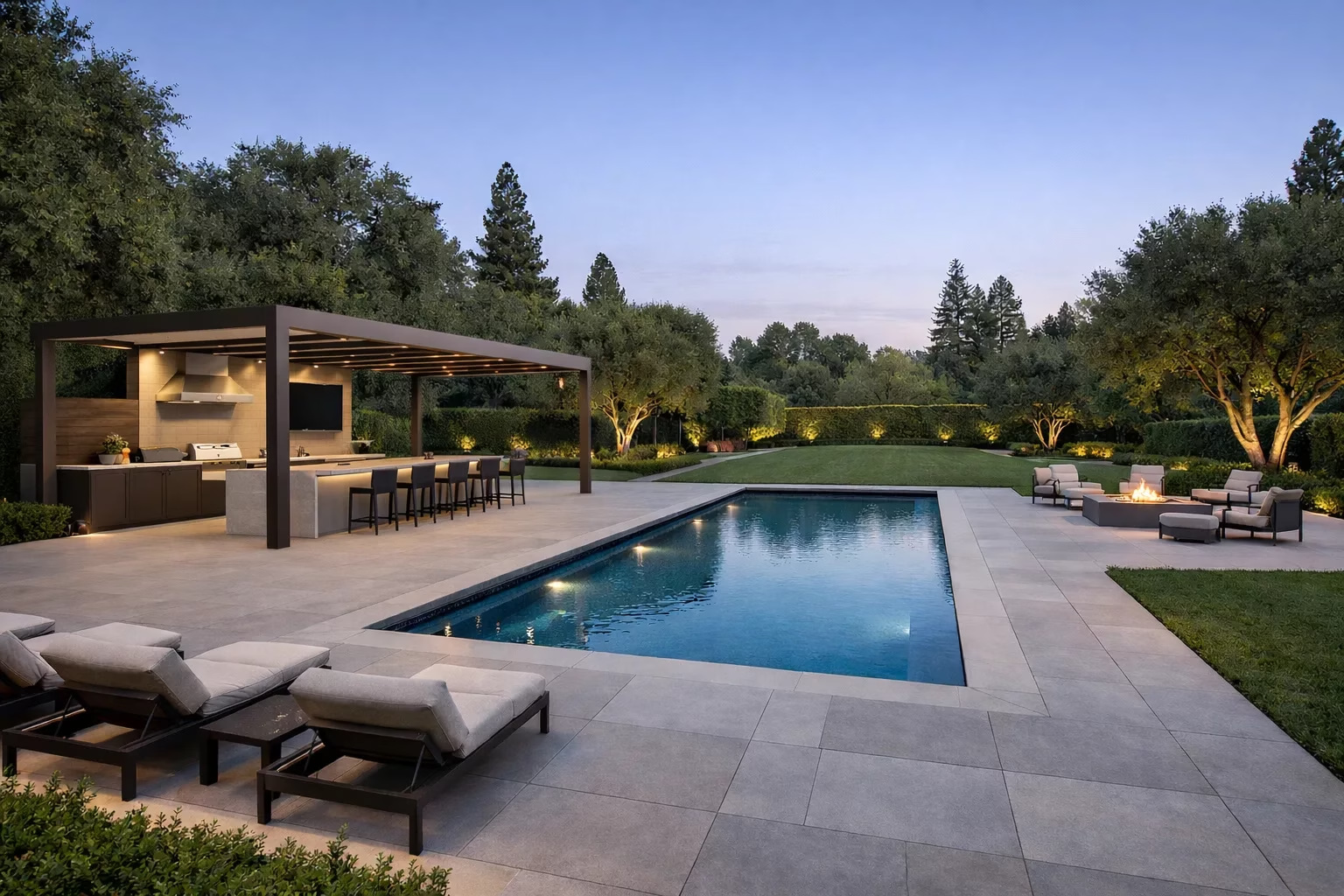


Project Fit & Investment Tiers
Sequoia Outdoor specializes in complete outdoor environments on the Peninsula. We do not build standalone prefab grill islands or execute minor utility repairs.
- Minimum Project Engagement: $25,000
- Published completed projects: $50,000 to $431,000 on this site, each shown with its scope and rounded investment
- On-Time Guarantee: Applies to all comprehensive design-build contracts.
A true luxury outdoor kitchen on the Peninsula is not simply a grill bolted to a stone veneer box. It is a secondary architectural structure requiring high-BTU gas line calculations, dedicated sub-panels, rigorous city permitting, and deep foundation engineering. In Atherton, Woodside, and Los Altos, a failed outdoor kitchen usually stems from a contractor who underestimated the utility loads or failed to properly route the internal plumbing. This 2026 guide reveals the true costs of CMU block construction, appliance integration, and the infrastructure that decides whether the finished kitchen works.
Educational only (not engineering advice). Every site is unique. Always verify structural requirements with a licensed civil engineer and your local Authority Having Jurisdiction (AHJ).
TL;DR: Outdoor Kitchen Costs (2026)
- $50k and up: Premium island with bar seating, high-end appliance package (grill, fridge, trash pull), dedicated gas/electric routing, and custom masonry finish.
- $85k and up: Expanded L-shape or U-shape layouts, integrated pizza ovens, warming drawers, sink/plumbing connections, and high-end natural stone counters.
- $150k and up: Complete architectural entertaining wings featuring solid-roof pavilions, radiant heating, outdoor AV systems, and full-scale civil engineering.
- Biggest Cost Drivers: Appliance tier, CMU block vs. metal stud construction, utility trenching distances, and local permit/HOA requirements.
- The Sequoia Difference: We execute a “Trench Once” utility plan, calculating all gas and electrical loads before a single stone is laid.
Costs: Outdoor Kitchen Programs (2026)
You cannot price a custom outdoor kitchen strictly by the appliances you select. The true cost is dictated by the structural integrity of the island itself, the distance required to trench heavy utilities from the main house, and the strictness of the local building code.
| Program Level | Typical Investment | Core Scope Included |
| Premium Linear Island | $50k and up | CMU block construction, bar seating overhang, high-end grill & refrigeration package, dedicated gas/electrical trenching, and custom stone veneer. |
| Expanded Chef’s Layout | $85k and up | L-shape or U-shape footprint, integrated sink requiring deep plumbing tie-ins, built-in pizza oven, warming drawers, and specialized task lighting. |
| Architectural Entertaining Wing | $150k and up | Large structural footprint protected by a solid-roof pavilion, extensive structural footings, custom masonry fire features, and full AV integration. |
Cost Adders: What Escalates Kitchen Budgets
These specific variables dictate the complexity of the engineering and the duration of the permit process.
| Critical Adder | Why It Increases Cost | Where It Goes Wrong |
| Gas Line Sizing | Running a large grill, side burners, and a fire pit simultaneously requires a high-capacity gas line trenched from the main meter. | Tying into an existing, under-sized gas line, resulting in dangerously low pressure and appliance failure. |
| Plumbing Tie-Ins | Adding a functional sink requires trenching both a pressurized water line and a legal, code-compliant sewer drain path. | Allowing sink greywater to drain illegally into the soil or garden beds. |
| Covered Structures | Adding a pavilion or pergola over the kitchen triggers structural footings, wind load engineering, and complex roof drainage mapping. | Failing to design a fire-safe ventilation gap between the grill exhaust and the roof structure. |
Spec Tiers: How Estate Kitchens Are Actually Built
The interior structure of your island determines if your countertops will crack and if your expensive appliances will short out during the first heavy rain.
| System Element | Common Approach | The Sequoia Spec |
| Internal Structure | Flimsy galvanized metal studs wrapped in thin cement board that rusts over time. | Permanent CMU (Concrete Masonry Unit) block walls built on a reinforced concrete footing. |
| Electrical Routing | Extension cords plugged into a single shared outlet, leading to tripped breakers. | Dedicated 20-amp circuits trenched from a new sub-panel to handle heavy appliance loads safely. |
| Countertop Base | Stone glued directly to uneven frames, leading to immediate stress cracks. | Poured solid concrete countertop base to ensure absolutely zero flex beneath the premium stone finish. |
Drainage & Utilities Operational Flow
An outdoor kitchen is a hub of competing utilities. If gas, water, electrical, and drainage are not meticulously planned before construction begins, you will be tearing up finished masonry to fix them.
Pro Tip: The Trench Once Strategy
- Gas Calculations: We calculate the total simultaneous BTU draw of the grill, burners, and fire pit to ensure the main line is correctly sized before trenching.
- Electrical Segregation: Refrigerators and lighting require distinct, dedicated circuits to prevent voltage drops.
- Internal Island Drainage: We install dedicated weep holes and drains inside the CMU block structure so water cannot pool and rot the appliance undercarriages.
Permits, Safety Codes, and HOA Realities
In jurisdictions like Hillsborough, Palo Alto, and Portola Valley, custom outdoor kitchens are heavily scrutinized by building inspectors.
Common 2026 Permit Triggers: Running new gas lines, adding electrical sub-panels, plumbing a sink to the sewer lateral, and building heavy masonry structures all require specific, specialized permits. Furthermore, open flames and grills have strict distance setbacks from property lines and combustible materials.
Sequoia Outdoor manages this entire regulatory process. We ensure the utility engineering passes city review and navigate the complex HOA architectural boards on your behalf.
Protect Your Estate: Sequoia’s Due Diligence Advantage
Most contractors will gladly show you a shiny new grill. They will never show you the dangerous wiring hidden behind it. We built Sequoia to provide absolute operational safety and transparency.
What to Ask Any Contractor, Including Us
- Excess Liability Insurance: We carry a $5,000,000 umbrella policy above our general liability coverage.
- Documented Subsurface Proof: Our Project Managers capture mandatory photo and video proof of the gas line depth, electrical conduit, and foundation pouring before anything is covered up.
- The On-Time Guarantee: We put a written completion guarantee in the contract. If our internal scheduling causes a delay, we provide financial compensation.
Timeline: Architectural Kitchen Scheduling
- Design & Utility Definition: 2 to 8 weeks depending on appliance selection and layout complexity.
- Engineering and Permits: 4 to 12+ weeks as city inspectors review the gas, plumbing, and electrical load calculations.
- Construction: 4 to 12+ weeks of active installation, heavily dependent on the depth of utility trenching and custom masonry curing times.
Quote Checklist: Comparing Utility & Masonry Bids
If the internal structure and utility sizing are not written into the contract, you cannot tell whether the gas and electrical will carry the appliances you chose.
| Contract Item | What to Demand in Writing | The Red Flag |
| Internal Structure | Explicit callouts for CMU block construction and poured concrete footings. | Building the island out of wood or thin metal studs. |
| Gas Engineering | Detailed BTU calculations proving the main gas line can support all features simultaneously. | Assuming the existing BBQ gas stub is sufficient for a custom build. |
| Permits & Approvals | Clear legal language dictating who handles the city permitting and inspections. | The contract explicitly states the homeowner is responsible for all electrical and gas permits. |
Qualifying Questions (Speeds Up Your Estimate)
- City & Neighborhood: Atherton, Hillsborough, Portola Valley, Woodside, Menlo Park, Palo Alto, Los Altos Hills, Saratoga, Monte Sereno, Los Gatos.
- Scope: Island layout, appliance tiers, sink additions, pergola integration, utility routing distances.
- Timeline: Ideal start date and any strict deadlines.
- Project Budget Range: $50k and up.
- HOA: Yes or no, and known property line setbacks.
Frequently Asked Questions
What is Sequoia’s minimum project size?
Our minimum engagement is $25,000. We design and build permanent, architectural outdoor kitchens as part of comprehensive outdoor living programs. We do not install prefab grill carts or perform minor utility repairs.
Does the On-Time Guarantee apply to kitchen builds?
Yes. Our On-Time Guarantee applies to all comprehensive design-build contracts. We account for custom appliance lead times and complex permit cycles during the planning phase to lock in a confirmed timeline.
Do I need permits for an outdoor kitchen on the Peninsula?
Always. Trenching new gas lines, running dedicated electrical circuits, and tying plumbing into the sewer system trigger mandatory and strict city safety reviews. We manage this process completely.
How long does a custom kitchen take to build?
The engineering and permit approval phase requires several weeks. Once the permit is pulled, the heavy trenching for utilities and the curing of the CMU block foundation dictate the pace of the construction phase.
Service Area (Peninsula Focus)
We serve San Mateo and Santa Clara Counties, heavily focused on navigating the strict regulations of ultra-affluent pockets.
San Mateo County: Atherton (94027), Hillsborough (94010, 94062), Portola Valley (94028), Menlo Park (94025), San Carlos (94070), Woodside, and Emerald Hills.
Santa Clara County: Los Altos Hills (94022, 94024), Los Altos (94022, 94024), Saratoga (95070), Monte Sereno (95030), Palo Alto (94301, 94304, 94306), Cupertino (95014), Los Gatos (95030, 95032).
Secure Your Estate With Engineered Precision
We plan the entire system first: heavy gas line engineering, dedicated electrical circuits, CSLB-compliant structural foundations, and the masonry detail. Then we execute with real-time milestone tracking and a contracted completion date, set after the pre-construction walkthrough.