
Pool deck pavers · Peninsula & South Bay
Paver pool deck installation, Peninsula & South Bay
Paver pool surrounds planned around wet-use product data, surface temperature, coping, drainage and coordination with your existing pool, built by one licensed hardscape team.
CA Lic #1099847
/
$2M GL · $5M umbrella
/
Completion date in writing
/
CMHA Certified Installer
Planning ballpark
From $36 / sq ft
installed. Coping, drainage and pool-interface work are priced separately.
Coping
From $60 / lin ft
Project minimum
$25,000
Completion date
In writing
Verified reviews
80 reviews & recommendations · 6 platforms
Around water, the rules change
Four decisions determine how a paver pool deck performs
A pool surround is not a patio that happens to be near water. Product selection, surface temperature, the coping transition and the drainage all have to be settled before demolition starts, and three of the four involve your pool contractor.
Wet-use surface selection
No exterior surface is slip-proof when wet. The paver is chosen from the manufacturer’s wet-use documentation for the environment it is going into, not from a general claim about pavers.
- Manufacturer wet-use documentation
- Surface texture
- Edge profile
- Joint width
- Barefoot comfort
- Sealer, if any
- Cleaning requirements
- Pool-chemical exposure
- Color and solar reflectance
- Shade and sun exposure
Surface temperature
Every hardscape surface gets hot in direct sun. Lighter colors often absorb less solar energy than darker ones, but the actual temperature depends on the product and the site, so we show physical samples in conditions like yours wherever we can.
- Product composition
- Color
- Finish and texture
- Solar reflectance
- Air temperature
- Time of day
- Shade
- Surrounding walls and hardscape
Coping and pool-edge coordination
Coping is the transition between the water and the deck, and it is the single most common place for two contractors to leave a gap in responsibility. The design settles who installs what before anything is demolished.
- Pool shell or bond-beam condition
- Existing pool tile
- Coping material and profile
- Overhang and edge treatment
- Transition or movement joint
- Automatic pool-cover track
- Deck elevation
- Drainage
- Responsibility between the two contractors
Drainage and pool-system coordination
All of this is planned before demolition, because most of it is buried by the time the pavers go down. Where water goes follows the approved site plan and local requirements, not a rule of thumb.
- Surface slope and discharge direction
- Deck or channel drains
- Bedding-layer drainage
- Downspouts
- Existing pool plumbing
- Equipment access
- Electrical and required bonding
- Automatic-cover components
- Irrigation
- Lighting and conduit
- Pool-contractor sequencing
Two contracts, one edge
What we build, and where the pool contractor fits
We build the surrounding hardscape. Pool-shell work, plaster, tile, equipment and specialized pool plumbing usually sit with a pool contractor. Where both scopes are involved, the coping, the finished elevations, the drainage, the electrical, any pool-cover components and the schedule all get coordinated before the deck goes in.
The hardscape, the drainage and the landscape
- Demolition of the existing deck
- Excavation and haul-off
- Base preparation and compaction
- Deck drainage, piping and dry wells
- The concrete bond beam at the pool edge
- Paver installation, cuts and edge restraint
- Joint material and cleanup
- Turf, planting, lighting and irrigation around the deck
- Coping, on the jobs where we install it
The pool itself
- Pool shell work and structural repair
- Plaster and interior finish
- Pool tile
- Pool equipment and specialized pool plumbing
- Pool startup and water chemistry
- Coping, on the jobs where your pool contractor is already replacing it
Coping goes either way and we say which on your project before you sign. On the Los Altos deck below, the owner’s pool contractor replaced the coping and re-plastered the pool; we poured the bond beam at the pool edge and laid the field once the new coping was in, working to their schedule. We are not the pool-shell contractor and do not hold that license.
Priced in the open
What does a paver pool deck cost on the Peninsula?
A standard pool-deck paver field currently begins around $36 per square foot installed. Coping, drainage, premium materials and work at the pool interface are separate, because those depend on the pool’s shape, its linear footage, what is already built and which system you choose.
Demolition where specified, excavation and haul-off, the specified base, compaction, bedding, the paver allowance, perimeter edge restraint, joint material, delivery, installation, cleanup, and the planned elevations and surface drainage.
Priced by linear footage, material, existing conditions and who installs it. On projects where your pool contractor is already replacing the coping it leaves our scope and we coordinate the transition instead.
The cost of the units themselves. Whether that adds in full or offsets the standard paver allowance already inside the field rate is stated line by line in your proposal.
An individual inlet or catch basin. A complete drainage system, with channel drain, pipe run, trenching, tie-ins, a dry well or a pump, is priced by the components the property needs and can total considerably more than the visible drain.
Signed project value, before permits and engineering.
The standard field includes
- Standard demolition where specified
- Excavation and haul-off
- Specified aggregate or supported base
- Compaction
- Bedding system
- Paver material within the stated allowance
- Standard perimeter edge restraint
- Specified joint material
- Delivery
- Installation and cleanup
- Planned finished elevations and surface drainage
Itemized or excluded when they apply
- Coping
- Existing coping removal
- Bond-beam or pool-shell repair
- Pool tile
- Pool plaster
- Pool plumbing or equipment
- Electrical and bonding
- Automatic pool-cover work
- Channel drains
- Catch basins
- Drainpipe and trenching
- Dry wells or discharge systems
- Additional demolition
- Soil stabilization
- Concrete-supported pool-edge assembly
- Premium or porcelain materials
- Steps and walls
- Lighting
- Planting and irrigation
- Permits and engineering
These are as-sold rates, rounded. The paver field prices like a large patio, which is why it sits close to the parent paver page rate for large fields. Your figure comes from a site visit and the scope you choose.
The pool deck itself
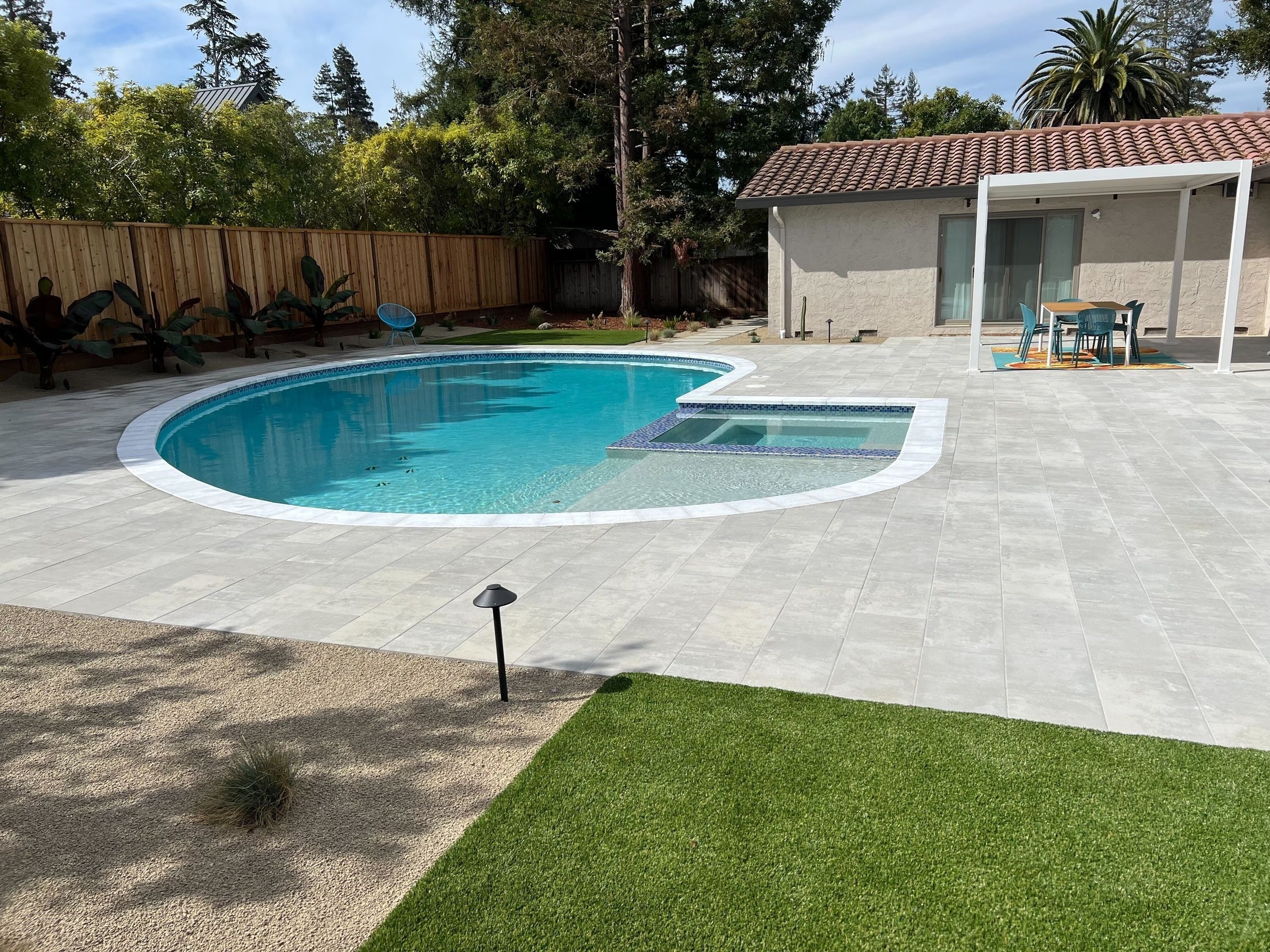
1,679 sq ft of Belgard around a Los Altos pool
Cracked aggregate around a kidney pool became a Belgard Dimensions deck, a turf lawn, nineteen low-voltage fixtures and drought-friendly planting, built in step with the owner’s pool renovation.
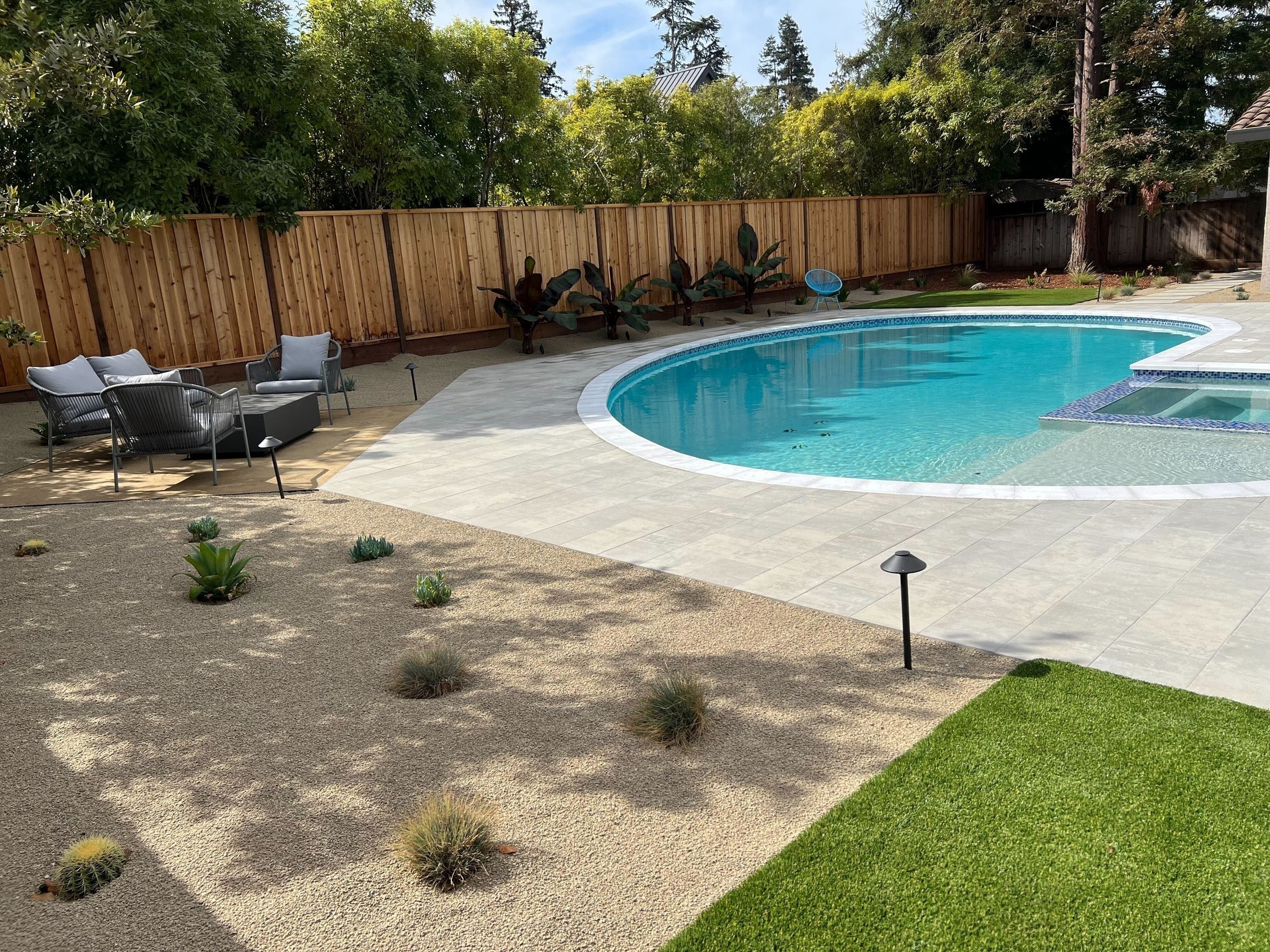
- Belgard Dimensions pavers1,679 sq ft
- ColorScandia Gray, 24×36 accents
- Excavation~7.5 in
- BaseCompacted Class II
- Pool edgeConcrete bond beam
- Drainage pipe120 ft of 3 in SDR-35
- Catch basins2
- Downspout tie-ins3
- Dry well1
- Artificial turf panel384 sq ft
- Low-voltage fixtures19
- Paver material, delivery, install$52,000–$57,000
- Drainage and irrigation$7,600–$8,400
- Complete Sequoia scope$95,540–$105,300
The owners had already hired a pool contractor to re-plaster the pool and replace its coping, which set the real constraint: everything around the water had to come out and go back in around another company’s schedule. We sequenced the rebuild to theirs, and once the new coping was in, excavated 7.5 inches, compacted Class II base, poured the concrete bond beam at the pool edge and laid the field.


Choosing a paver
How to choose pavers for a pool deck
We install all five of these around water, from Belgard, Techo-Bloc, Basalite and the other manufacturers we buy from. What separates them is what the maker will document for a wet, chlorinated, barefoot environment, which is a narrower question than what suits an ordinary patio.
Textured concrete pavers
Broad color, pattern and coping options.
Large-format concrete pavers
A contemporary look with fewer visual joints.
Outdoor porcelain pavers
A dense surface and contemporary finishes.
Natural stone
Distinct color and texture that manufactured units cannot copy.
Permeable paver system
Manages selected stormwater conditions where approved.
Twelve things a proposal should name.
Around a pool, “premium pavers” is not a specification and neither is “slip-resistant”. Ask for the documentation, and look at samples wet, in daylight, next to the coping and next to the house.
- Manufacturer
- Product line
- Color
- Finish
- Dimensions and thickness
- Wet-use documentation
- Solar-reflectance data where available
- Coping availability
- Chemical compatibility
- Sealing requirements
- Warranty
- Cleaning instructions
Under the surface
How a paver pool deck is built
Most of what decides whether a pool deck lasts is buried before the first paver is set, and around a pool a good part of it has to be agreed with someone else’s crew first.
Pool and site coordination
Confirm the condition and scope of the pool, coping, tile, automatic cover, plumbing, electrical, equipment and any renovation already planned, and agree who is doing what.
Survey elevations and drainage
Record thresholds, coping elevation, existing drains, surrounding structures and the approved destination for runoff.
Demolition and excavation
Remove the existing deck and unsuitable supporting material while protecting the pool shell, the plumbing and the equipment.
Prepare the pool-edge assembly
Coordinate the coping, the pool-edge support and any required movement or isolation joint with the approved pool and paver details.
Build the deck base and drainage
Install the site-specific aggregate, concrete-supported or other approved base, then the deck drains, bedding-layer drainage and utility components, before anything is covered. Backfill close to a pool can need a different assembly from an ordinary patio when it cannot be compacted adequately, so not every pool deck sits on the same Class II base.
Install pavers and joint material
Set the selected pavers to the approved layout, complete the pool curves and cuts, install the edge restraints, and use a joint material the manufacturer approves for that system and that pool environment rather than defaulting to polymeric sand.
Clean, document and review
Remove installation residue, photograph the concealed stages, walk the care instructions, and coordinate final pool startup or cleaning with the pool contractor.
Drainage follows the approved site plan and local requirements. “Sloped away from the pool” describes one part of one deck, not a universal detail, and where the water finally goes is the part that matters.
How it gets built
One accountable team, start to sign-off.
01
Project-fit consult
We walk your property, confirm scope and budget fit, and make sure we are the right team.
02
Design & fixed date
Scaled plan, material selections, and your completion date set in writing.
03
Build & live tracker
Our project manager runs the build, documented layer by layer in your portal with daily updates.
04
Walkthrough & sign-off
We finish on the promised date and walk every detail with you before sign-off.
After the build
What paver maintenance actually involves
Pavers are lower-maintenance than most homeowners expect, and they are not maintenance-free. What the surface needs depends on the paver, the joint material, the trees near it, the drainage and how hard it gets used.
Sweep and clear
Keep organic debris off the surface, especially under trees.
Clean to the maker’s method
Spills come up with the manufacturer-approved product, not whatever is under the sink.
Inspect the joints
Check joint material periodically and replenish it when needed.
Watch the water
Address drainage or settlement early, while it is still small.
Replace single units
A chipped or cracked paver can usually be lifted and swapped rather than patched.
Pressure-wash with care
Use a setting approved for that paver and joint. Too much pressure strips the joints.
Sealing is optional
It suits some products and not others. It is not universally required.
Expect wear, not perfection
Units can chip or crack, and a surface can settle if the base or the drainage fails.
A two-year workmanship warranty.
Sequoia’s paver installation carries a two-year workmanship warranty. The signed agreement controls the coverage, the exclusions, your maintenance responsibilities and how a claim is made.
Manufacturer warranties are separate.
Material coverage comes from the maker of the product you select, not from us, and it varies by product. We name the manufacturer and the product in the proposal so you can read what they actually warrant before you choose.
On-time completion is a separate promise with its own terms: for signed projects at the $25,000 minimum, a company-caused delay past the date in your agreement credits you, on the schedule set out in the signed addendum.
Questions
Paver pool-deck questions.
How much does a paver pool deck cost?
The standard paver field currently begins around $36 per square foot. Coping starts around $60 per linear foot when we install it, and drainage is itemized by the components and the complete system the property needs. Premium materials, demolition of an existing deck and work at the pool interface all add to it. Our project minimum is $25,000.
Is coping included in the paver-field price?
No. The field price covers the paved surface around the pool. Coping is a separate pool-edge component, priced by linear footage, material, existing conditions and who installs it. On some projects we set it; on others your pool contractor is already replacing it and we coordinate the transition instead. Your proposal says which.
What is pool coping?
Coping caps the top edge of the pool and creates the transition between the water and the deck. Its profile, overhang, material, joints and connection to the paver field all have to be coordinated with the pool construction and with any automatic cover.
Does Sequoia renovate the pool itself?
No. We build and coordinate the surrounding hardscape, drainage and landscape. Pool plaster, tile, equipment and specialized pool work are done by a pool contractor. The two scopes are coordinated so the coping, the elevations and the paving meet correctly, which is exactly how the Los Altos project on this page was run.
Can pavers be installed around an existing pool?
Yes, when the pool edge, coping, plumbing, elevations and supporting conditions can be worked into the approved design. The existing deck usually has to come out so the base, the drainage and the transitions can be rebuilt properly.
Can pavers be installed over an existing concrete pool deck?
Sometimes. A thin-paver or overlay system can work when the concrete is structurally sound and the added height does not cause a problem at the coping, the drains, the doors or another transition. Cracked, moving or badly drained concrete usually needs removing instead.
Will pool-deck pavers get hot?
Yes. Any hardscape gets hot in direct sun. Lighter colors often absorb less solar energy than darker ones, but the actual surface temperature depends on the specific product, the finish, the weather and the shade. Read the manufacturer data and look at samples in conditions like yours.
Are pavers slip-proof around a pool?
No. No exterior surface is slip-proof when wet. Choose a product documented for the wet-use environment you are putting it in, drain the deck properly, and keep the surface clear of algae, oils and other contaminants. Sealer choice also affects traction.
How is drainage handled around a pool deck?
The deck and the supporting system are graded toward an approved drainage path. Depending on the property that can mean deck drains, channel drains, catch basins, subsurface drainage, piping or a dry well. The plan should keep deck runoff out of the pool and away from the house.
Does a pool deck need a different base from a patio?
It can. Backfill around a pool is often difficult to compact, and the pool edge adds transition and movement considerations a patio does not have. Whether the right answer is aggregate, a concrete-supported assembly or something else depends on the pool construction, the soil and the drainage.
Are pavers compatible with saltwater and chlorine pools?
It depends on the exact paver, coping, joint material and sealer, and on the manufacturer’s instructions. The proposal names the products and their documented suitability for your pool environment rather than making a blanket claim about pavers.
Does a paver pool deck need sealing?
Not always. It depends on the product, the chemical exposure, the appearance you want and the manufacturer’s instructions. A sealer used around a pool has to suit both the product and the wet environment, and it should not leave the surface unexpectedly slick.
How long does pool-deck installation take?
It depends on demolition, the size of the deck, who is responsible for coping, what the pool contractor is doing, the drainage and the materials. We set the completion date once the scopes, selections, permits, utility requirements and the construction sequence are all confirmed.
Are permits required?
It varies by city and by scope. Coping changes, electrical or bonding work, structural repairs, drainage changes, pool barriers and associated structures can all require permits or inspections. We confirm what applies with the local authority before construction.
What is the project minimum?
$25,000. Pool-deck projects usually include the paver field, the drainage and related landscape work, with coping and pool-contractor scope identified separately.
Where we work
Paver pool decks across San Mateo and Santa Clara counties
Throughout the Peninsula and South Bay. Projects begin at the $25,000 minimum, and a pool deck almost always arrives with drainage, lighting, planting, turf or another outdoor-living element rather than on its own.
- San Mateo
- Hillsborough
- Belmont
- San Carlos
- Redwood City
- Atherton
- Menlo Park
- Woodside
- Portola Valley
- Palo Alto
- Los Altos
- Los Altos Hills
- Mountain View
- Sunnyvale
- Cupertino
- Saratoga
- Los Gatos
- San Jose
Ready to plan your pool deck?
Tell us the space and the scope. We will walk your property, set a real date in writing, and show you exactly how it gets built.