Custom fire pit design + build
Fire pits & fire features, Peninsula & South Bay
Built-in wood, natural-gas and propane fire features planned around the selected appliance, fuel supply, seating, wind, clearances and the surrounding patio.
CA Lic #1099847
/
$2M GL · $5M umbrella
/
On-time guarantee
/
BBB A+
Planning ballpark
From $8,000
for the fire feature itself, inside a qualifying outdoor-living project. Gas appliance, masonry and seating move it up.
Not a fit for
Standalone kit drop-ins
Project minimum
$25,000
Completion date
In writing
Verified reviews
80 reviews & recommendations · 6 platforms
Priced in the open
What does a custom fire pit cost here?
A manufactured burner or kit costs a few thousand dollars. A finished fire-pit area usually also needs fuel routing, masonry or an approved enclosure, drainage, controls, seating and patio work around it, which is why the component price and the project price are not the same number.
Two completed fire-feature scopes
Line items from signed proposals, rounded.
of $96,150–$106,360 · Fire pit rebuilt in charcoal block around an Elements 34-inch gas burner, with the surrounding seat walls and terrace.
of $50,000–$60,000 · Stucco CMU wall plus a refresh of an existing fire pit and seat bench, raised and capped with a new bullnose.
These are not the same scope. Atherton was a fire pit built from scratch with a gas burner. San Carlos was a refresh of a pit that was already there. Neither is a standalone quote, and neither is a promise about your yard.
Inside a qualifying project
Pricing reviewed February 2026. Current proposal controls.
For the whole project. A fire feature is built as part of a patio, backyard or outdoor-living project.
We do not take standalone fire-pit drop-ins or minor gas-line repairs. If that is what you need we will tell you in the first conversation rather than after a site visit.
The two projects above sat inside complete yards of $50,000 and $106,360. That is the honest shape of this work: the fire feature is the centerpiece and it is rarely the largest line. See the fire-pit cost guide for the full breakdown.
What moves your number: the appliance or burner model, the fuel, how far the fuel line has to run and whether the existing supply can carry it, the ignition and any electrical requirement, the masonry, veneer and caps, integrated seat walls, patio demolition and construction, drainage, site access and excavation, and permits or local review. Your figure comes from a site visit and the documented scope.
These are planning ballparks, not a rate card. Any figure shown for a completed project is what that specific job cost, on its own site, with its own access, selections and scope. Yours is priced from yours, and the written proposal is the only number that binds either of us.
Fuel
Wood, natural gas or propane?
Fuel choice changes daily use, smoke, available heat, what the gas system has to do and which appliance models you can even consider. It gets decided before the enclosure and the seating layout are finalized, not after.
Wood-burning
The traditional flame, the sound and the embers. It also makes smoke, needs fuel storage and wants more attention while it is burning, and in the Bay Area it is the fuel with real restrictions attached.
- Smoke and ember management
- Fuel storage and ash removal
- Wider clearances than most gas appliances
- Local burn rules checked before design
- Cannot be used on an alert day
Fixed service
Push-button convenience and no fuel to store, provided the supply can carry it. The appliance input, total connected load, meter capacity, available pressure, pipe size and run length all have to be verified rather than assumed.
- Appliance input and connected load
- Meter capacity and available pressure
- Pipe sizing over the run length
- A long run may need a larger line
- Utility-side review on some properties
Where gas is not available
A workable answer when there is no gas service, but the appliance itself has to be approved for propane. Not every natural-gas model can be converted, and the ones that can need an approved manufacturer conversion.
- Appliance approved for propane
- Cylinder or bulk supply placement
- Regulator requirements
- Enclosure ventilation
- Service and refill access
Outdoor fire pits are covered by the Bay Area burn ban, and the banned days roughly doubled in October 2025.
The Bay Area Air District states it is illegal to use fireplaces, wood stoves, pellet stoves, outdoor fire pits or any other wood-burning device during a Spare the Air Alert for fine-particle pollution. In October 2025 the Board lowered the alert threshold from a daily forecast of 35 to 25 micrograms per cubic meter, effective immediately.
If you want a fire you can light whenever you feel like it, that points at gas. If you want wood, check the current alert before every fire. Sources: Air District wood-smoke rules and the October 2025 amendments.
Local jurisdictions can restrict outdoor wood burning further than the District does, and some do. We check the rules for your address before the design is finalized rather than after the pit is built.
Where the plan starts
A fire-pit plan starts with the appliance, not the stone
There is no single clearance, enclosure or seating dimension that applies to every fire pit. The exact appliance or burner assembly gets selected before the construction documents are finished, and its installation requirements go into the plan rather than being worked around afterwards.
That every fire pit needs the same thing.
Enclosure construction, ventilation, drainage, approved media, clearances and overhead conditions all come from the selected appliance’s listing and its current installation instructions. Manufacturers vary clearance by appliance input and specify their own ventilation, drainage, service-access and shutoff requirements. One set of numbers applied to every product is how an appliance ends up installed outside its listing.
An enclosure designed for the appliance going into it.
Including the ventilation, the drainage and the service access that specific unit requires, with the shutoff somewhere you can reach without leaning over the flame. That is a real commitment and it is checkable against the manual, which a blanket assurance never is.
Placement
Plan the flame, the seating and what is overhead together
A fire pit does not get positioned by drawing a circle on the patio and adding a burner later. Flame geometry, heat exposure, wind, furniture depth, circulation, where the controls sit and the appliance’s own clearance requirements all decide the footprint.
What the layout has to resolve
- Flame geometry and how the heat actually radiates
- Prevailing wind, and which seat gets the smoke
- Furniture depth and how people move past it
- Where the controls and the shutoff live
- The appliance’s own clearance requirements
- Drainage, from the appliance outward
- Service access for anything that will need reaching later
We do not publish one universal seating distance. The dimensioned plan follows the selected appliance’s installation instructions and whatever the local authority having jurisdiction requires.
Anything overhead is a design input, not a detail
A pergola, roof, overhang, screen or tree canopy has to be evaluated before the fire feature is selected, not after. “Outdoor use” does not automatically mean an appliance is approved beneath a cover, and the overhead clearance a manufacturer specifies is frequently the constraint that decides which appliance you can have.
We will not tell you a fire pit is safe under a pergola unless that exact appliance’s documentation and the local review support it. If you want a covered lounge with a fire in it, say so at the start and it will shape the appliance selection.
Can a fire pit go into a paver patio? Usually yes, when the appliance support, the enclosure, the heat exposure, the drainage, the service access and the required separation are planned together with the paver system, and the materials next to the flame suit the appliance and the detail. That is a design question, not a product question.
Completed fire features
Two published Peninsula fire pits
Two projects, two genuinely different scopes, both with their real figures and their limits attached. We are not going to show you a wall of loosely related yards and call them fire-pit projects.
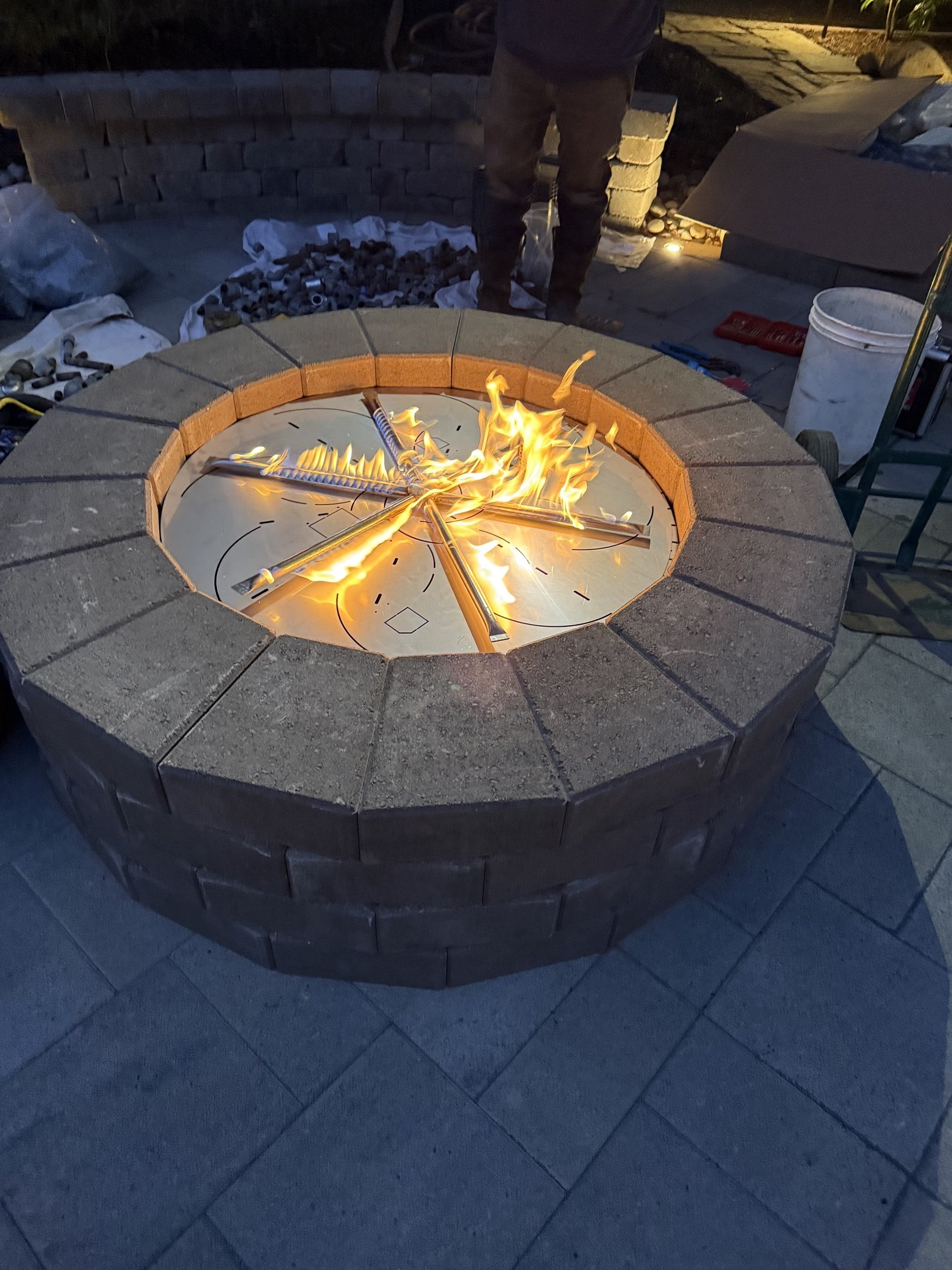
A fire pit we built twice
The first pit was finished and structurally fine. The owner saw the tan block and wanted a different look, so we wrote a change order, demolished our own week-old work and rebuilt it in charcoal block around an Elements 34-inch burner.
- Fire pit and seat walls
- $11,100–$12,300
- Complete landscape project
- $96,150–$106,360
- Appliance
- Elements 34-inch gas burner
- Gas line
- Run by the owner’s plumber
- First fire
- December 20, 2025
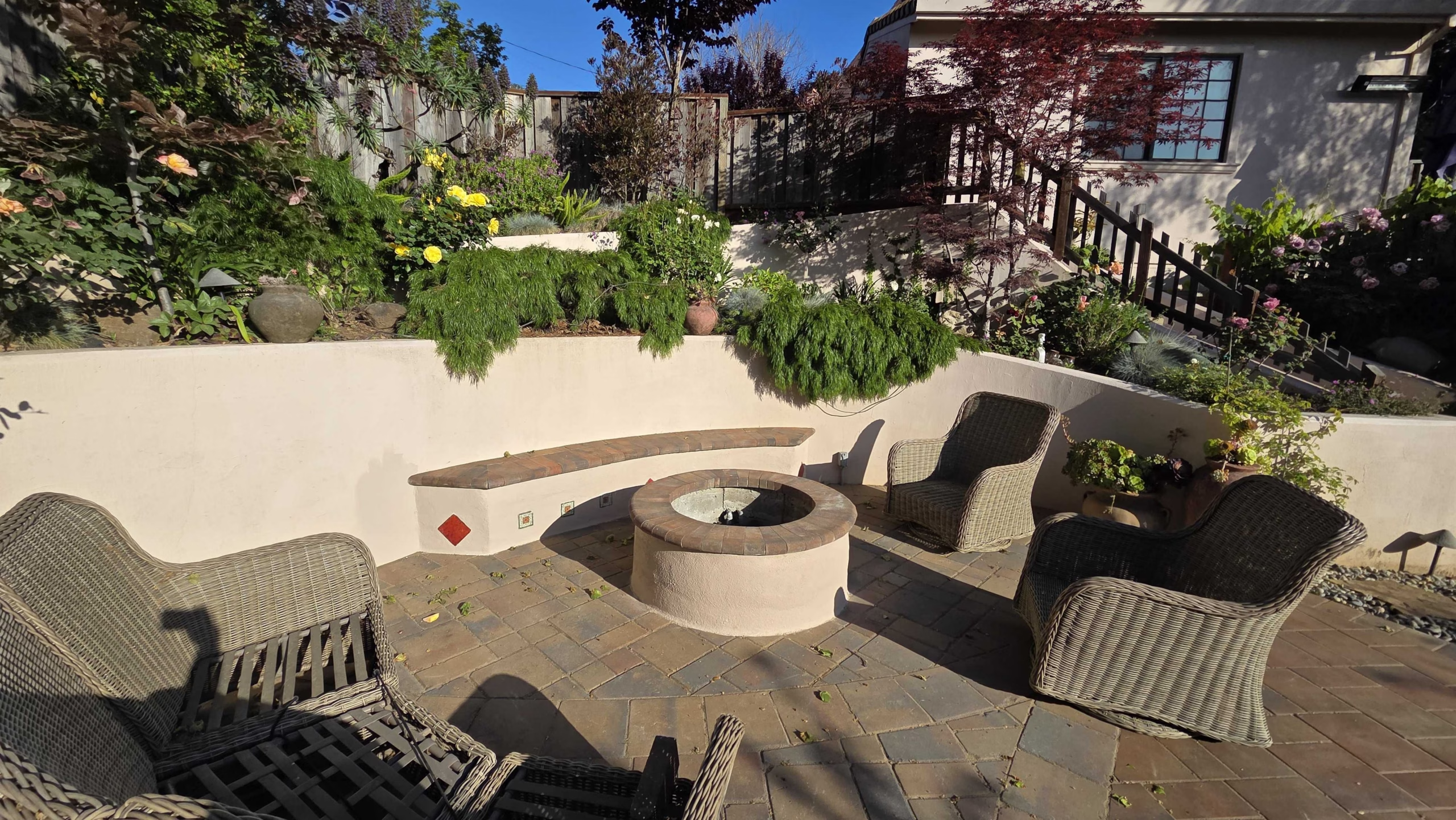
An existing fire pit, brought back
A refresh rather than a ground-up build. The fire pit and seat bench were already in place but had no finished cap, so they were raised and capped in new bullnose while the patio, turf, drainage and lighting around them were rebuilt.
- Wall, fire pit and bench refresh
- $8,000–$9,500
- Complete project
- $50,000–$60,000
- Scope
- Refresh, not a new build
- Finish
- Stucco with new bullnose cap
- Built with
- 242 sq ft Belgard patio
Ranges are as-sold, rounded, published at town level, and taken from the itemized breakdowns on the case studies themselves. The Atherton project is also the honest answer to what happens when something is built and you do not like it: we wrote the change order, took out our own finished work and did it again. The replacement burner took five weeks to arrive, and the owner signed off four days after it was lit. See all case studies.
Approvals
Permits, local rules and wildfire zones
Permit and inspection requirements vary by jurisdiction, fuel, appliance and the construction around it. New gas piping, electrical work, masonry or a nearby structure can each bring separate review.
How we handle it
Before work begins we confirm the current requirements with the applicable building department, the fire authority, the utility and the product manufacturer, and the proposal names who is responsible for each. California’s 2025 Title 24 took effect on 1 January 2026 and includes the California Fire Code and the Wildland-Urban Interface Code, and local jurisdictions adopt their own amendments on top of it (California Building Standards Commission).
What we will not tell you is that a fire pit always needs a permit, or never does.
If the property is in a fire hazard severity zone
Some Peninsula and South Bay properties sit in a mapped Fire Hazard Severity Zone or another locally regulated wildfire area, and many do not. Where one applies, we verify the property-specific requirements before finalizing the fire feature and the planting around it, because those rules reach the landscape as well as the appliance (CAL FIRE zone information and viewer).
Coordinated with the licensed trade responsible for it.
When new gas piping is required, Sequoia coordinates the fire-feature construction with the appropriately licensed trade partner responsible for the gas scope. The responsible parties, permits, testing and inspections are identified in the proposal and the project records. California places gas appliances, gas connections and property-side gas piping in the C-36 classification; we hold CA License #1099847 with classifications A, C-8, C-27, D-06 and D-12.
Atherton, in the published record.
The Elements burner was delivered on 16 December and installed with the owner’s plumber running the gas line. That is written into the case study, and it is how this normally works: we build the fire feature and the hardscape, and the gas scope belongs to whoever is licensed for it.
How it gets built
One accountable team, start to sign-off.
01
Project-fit consult
We walk your property, confirm scope and budget fit, and make sure we are the right team.
02
Design & fixed date
The appliance selected first, then the construction plan, material selections and your completion date set in writing.
03
Build & live tracker
One accountable project team coordinates the build and the licensed trades, documented layer by layer in your portal.
04
Walkthrough & sign-off
We finish on the promised date and walk every detail with you before sign-off.
Check your project fit
Is your fire-pit project a fit?
Tell us about the complete space: the fuel you have in mind, whether the patio is new or existing, and whether anything sits overhead. We build fire features as part of qualifying outdoor-living projects starting at $25,000, and we will confirm fit before scheduling a site visit.
Questions
Fire pit questions.
How much does a custom fire pit cost?
A manufactured kit or burner may cost a few thousand dollars, but a finished fire-pit area can also include fuel routing, masonry, drainage, controls, seat walls and patio work. Our two published fire-feature scopes ran $11,100 to $12,300 in Atherton and $8,000 to $9,500 in San Carlos, inside complete yards of $96,150 to $106,360 and $50,000 to $60,000. Those are not the same scope: Atherton was a rebuilt gas fire pit, San Carlos was a refresh of an existing pit and bench. Our minimum total project engagement is $25,000.
Does Sequoia install standalone fire-pit kits?
No. We incorporate fire features into qualifying patio, backyard and outdoor-living projects rather than taking a standalone kit installation or a minor gas-line repair. The minimum total project engagement is $25,000, and if a drop-in is what you need we will say so in the first conversation.
Is wood or gas better for a Bay Area fire pit?
Wood gives you the traditional flame, sound and embers, and it makes smoke, needs fuel storage and is subject to Bay Area burn restrictions. Natural gas is convenient fixed service but the supply has to be able to carry the appliance. Propane can work where there is no gas service, when the appliance is approved for it. If being able to light a fire whenever you want matters to you, that points at gas.
Can I use a wood fire pit during a Spare the Air Alert?
No. The Bay Area Air District states it is illegal to use fireplaces, wood stoves, pellet stoves, outdoor fire pits or any other wood-burning device during a Spare the Air Alert for fine-particle pollution. In October 2025 the Board lowered the alert threshold from a daily forecast of 35 to 25 micrograms per cubic meter, and estimates 19 to 41 alerts a year against a historical average of 15. Check the current alert before every wood fire. Burning garbage, plastics and other toxic materials is prohibited at all times.
Is the gas line included?
It depends on the proposal, and it will say. The appliance, the hookup, any new fuel-line routing, trenching, regulators, permits, meter work and inspection are listed separately so you can see exactly what is in and what is not. On our Atherton project the owner’s own plumber ran the gas line, which is recorded in that case study.
Who does the gas work?
When new gas piping is required, we coordinate the fire-feature construction with the appropriately licensed trade partner responsible for the gas scope, and the responsible parties, permits, testing and inspections are identified in the proposal and the project records. California places gas appliances, gas connections and property-side gas piping in the C-36 classification. We hold CA License #1099847 with classifications A, C-8, C-27, D-06 and D-12.
Does a fire pit require a permit?
It varies by city, appliance, fuel and the construction around it. Gas piping, electrical work, masonry or a nearby structure may each trigger separate review, and jurisdictions adopt their own amendments. We confirm the requirements with the applicable building department, fire authority and utility before construction begins.
How far should seating be from a fire pit?
There is no single distance that applies to every product, and we do not publish one. The layout accounts for the selected appliance’s instructions, its heat and flame characteristics, the wind, the furniture dimensions, circulation and any local requirement. The dimensioned plan follows the appliance, not a rule of thumb.
Can a gas fire pit go under a pergola or patio cover?
Only when the selected appliance’s listing and manufacturer instructions permit that specific overhead condition and the local authority accepts the installation. Being rated for outdoor use does not automatically mean approved beneath a roof or a pergola, and the overhead clearance a manufacturer specifies is often what decides which appliance you can have. Tell us at the start if the fire is going under cover.
Can a fire pit be installed in a paver patio?
Usually yes, when the appliance support, the enclosure, the heat exposure, the drainage, the service access and the required separation are planned together with the paver system. The materials next to the flame have to suit the selected appliance and the detail.
How are rain and drainage handled?
Drainage is planned from the selected appliance outward. Burner pans, valve boxes, enclosures and the surrounding patio can each have different requirements, and the approved media, weep paths, covers and service access follow the appliance instructions rather than a standard detail.
What does the enclosure need?
Whatever the appliance going into it requires: the ventilation, the drainage and the service access specified for that unit, with the shutoff somewhere you can reach without leaning over the flame. Manufacturers vary clearance by appliance input and publish their own requirements, so the document that governs is the manual for the unit you actually bought.
Is my property in a wildfire zone?
Some Peninsula and South Bay properties sit in a mapped Fire Hazard Severity Zone or another locally regulated wildfire area, and many do not. Where one applies we verify the property-specific requirements before finalizing the fire feature and the planting around it, because those rules reach the landscape as well as the appliance.
How long does a fire-pit project take?
It depends on the design, the product lead time, permits, fuel routing, masonry and the surrounding patio. Product lead time is the one people underestimate: the replacement burner on our Atherton project took five weeks to arrive. We give you the construction duration in writing once those items are confirmed.
Is there a project minimum?
Yes, $25,000 for the whole project. A fire feature is built as part of a larger patio, backyard or outdoor-living project rather than on its own.
Ready to plan your fire pit?
Tell us the space and the scope. We will walk your property, set a real date in writing, and show you exactly how it gets built.