
Outdoor Fireplace Design + Build
Custom Outdoor Fireplace Builder, Peninsula & South Bay
Masonry and listed outdoor fireplace systems planned with the patio, structural support, chimney or venting, fuel, clearances and local review. Not treated as a decorative wall with a fire in it.
CA Lic #1099847
/
$2M GL · $5M umbrella
/
On-time guarantee
/
BBB A+
Fireplace component
From $15,000
Built inside qualifying outdoor-living projects from $25,000.
Fuel options
Wood, gas or propane
Completion date
In writing
Verified reviews
80 review listings and recommendations across six platforms as of 2026-08-30
What it costs
How much does an outdoor fireplace cost in the Bay Area?
The short answer, then the part most pages leave out.
An outdoor fireplace is one line inside a larger project. Fireplaces start around $15,000 for the fireplace scope itself, and Sequoia’s minimum total project engagement is $25,000, so in practice the fireplace is scoped alongside the patio, seating, structure and drainage around it rather than sold as a standalone appliance drop. Where it lands above that floor is driven by the system you choose, the structural support it needs, the chimney or venting, the fuel and the finish. The full list of cost drivers is below.
Read what sits outside the fireplace number as carefully as the number itself. It commonly excludes the surrounding patio, pergola, seat walls, long utility runs, meter upgrades, drainage and heavy site preparation. Each of those should appear as its own line so you can see it. Your written proposal controls.
A figure we have sold at, not a measured band
It is a starting figure for outdoor fireplace work Sequoia sells, quoted as a floor because a floor is the honest shape for it. Where your project lands above it depends on the system, the structure, the venting, the fuel and the finish.
Not a per-square-foot band, and not a quote
The per-square-foot bands elsewhere on this site are measured across completed projects with signed contracts behind them, which is why those are quoted as ranges. A measured fireplace band goes here once more of this work is documented. Until then, our cost guide sets out the wider program bands and the projects below show what those particular jobs cost inside complete yards.
These are planning ballparks, not a rate card. Any figure shown for a completed project is what that specific job cost, on its own site, with its own access, selections and scope. Yours is priced from yours, and the written proposal is the only number that binds either of us.
Fireplace or fire pit
Outdoor fireplace or fire pit?
These solve different problems, and the wrong one is expensive to discover after it is built. Pick the shape of the gathering first, then the appliance.
A directional focal point
An outdoor fireplace creates a strong vertical focal point and directs the flame toward one primary seating area. It can also define the edge of a patio or outdoor room. In exchange it asks for more planning: its structure, chimney or venting, setbacks and everything built next to it.
Choose this when the design needs a directional focal point and architectural structure.
A gathering point
A fire pit creates a lower, more open gathering point with seating on several sides. It generally suits a more conversational layout, and it does not produce the same vertical architectural element that a fireplace does.
Choose this when the priority is gathering around the flame from several sides.
One expectation worth setting before either: an open outdoor fireplace gives localized, directional radiant heat near the opening. It is not a system for heating an entire uncovered patio, and nobody should sell it to you as one.
How it is built
Three different ways to build an outdoor fireplace
These are not three finishes on the same thing. They are three different products with different rules, and the choice is made before the surround is designed.
Listed modular masonry system
A modular refractory fireplace system arrives as a defined firebox and chimney configuration and is finished with masonry, stucco, brick, stone or tile. Its support, assembly, clearances, chimney and permitted outdoor configuration follow that model’s installation documentation, not a house style.
Site-built masonry fireplace
A site-built masonry fireplace is constructed from project-specific plans using masonry, firebrick and an approved chimney or flue design. Opening geometry, smoke chamber, chimney, reinforcement and structural support are coordinated as one system rather than detailed separately.
Factory-built outdoor gas fireplace
A listed outdoor gas fireplace removes some of the field-built combustion work. What it does not remove is the model-specific part: enclosure, venting, gas supply, drainage, electrical requirements and clearances still come from that appliance’s listing.
A modular masonry system and a metal factory-built appliance are different products and are worth keeping distinct when you compare quotes.
Per model, never universal
Any single clearance or support number you are handed is the number for one product. That is why the appliance is selected before the surround, the seating and the overhead structure are drawn, rather than after.
26 inches on one model, 48 on another
In the ICC-ES evaluation report for the Isokern systems, minimum clearance from the fireplace opening to side walls is 26 inches on the Standard models and 48 inches on the Magnum 60 and 72. Refractory brick runs a minimum 1-1/8 inches on most models and a minimum 4 inches at the side walls on those two. Same manufacturer, same family, nearly double the clearance. Source: ICC-ES ESR-2316, reissued October 2024.
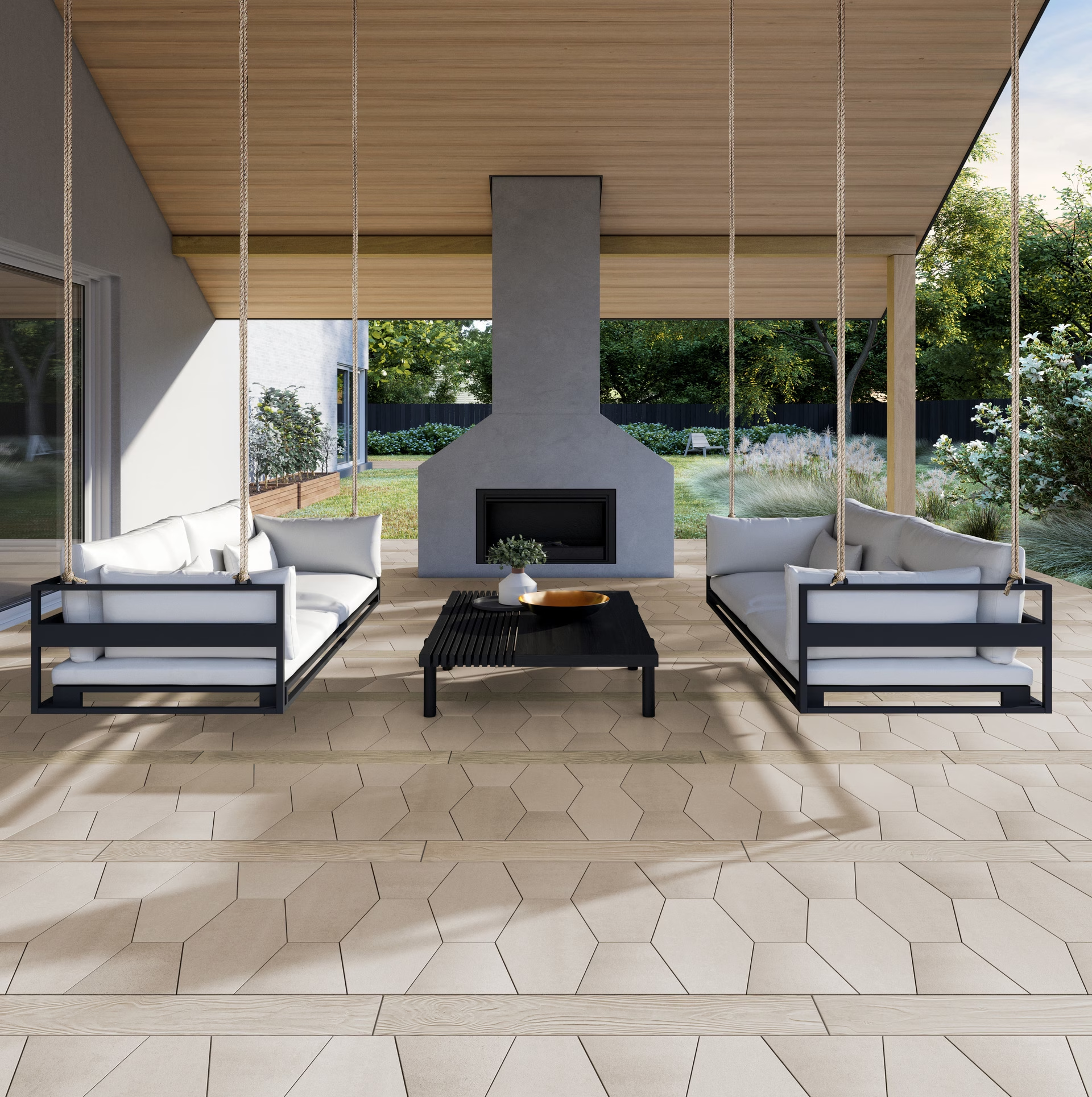
Requirements
An outdoor fireplace is a structure and a fire appliance
Most permanent outdoor fireplaces require some combination of building, planning, structural, fire, plumbing or electrical review. Which ones, and how much, depends on the city, the fireplace type, the fuel, the height, the location and what is built around it.
Location and local review
Before the fireplace is designed, we look at where it sits in relation to the house, property lines, fencing, trees, eaves, pergolas, neighboring structures and any locally regulated height or setback condition. Location is usually the constraint that decides the rest.
Structural support
Support depends on the fireplace system, total weight, veneer, chimney height, soil, slope and the surface it lands on. A masonry fireplace may need a reinforced foundation or another project-specific detail. There is no one footing that is correct for every fireplace, and any proposal that gives you one without seeing the site produced it from a template.
Firebox, chimney and venting
The firebox and the chimney or venting system are selected before the architectural surround is finalized. For a listed system the model’s instructions govern. A site-built masonry fireplace follows the approved plans and the applicable construction requirements. Draft is affected by fireplace geometry, chimney termination, wind, nearby structures and the selected system, so a fireplace that smokes back is diagnosed rather than assumed.
Combustible materials and overhead structures
Placement and everything built near it are planned together. Clearances to framing, fencing, roofs, eaves, pergolas, mantels, furniture and vegetation come from the fireplace system and the approved plans. This is the reason a fireplace and a pergola cannot be designed by two people who are not talking to each other.
Hearth, mantel and finish
Hearth extensions, mantels, veneer, firebrick and adjacent finish materials are selected for the fireplace type, its heat exposure and its installation requirements. A detail that is correct for one wood-burning system may not be correct for a factory-built gas appliance. A wood-storage niche is only included where it does not interfere with required clearances or put fuel where the selected system prohibits storage.
Water and weather
An outdoor fireplace also has to manage rain, which is the part that gets left out. The plan coordinates the chimney termination, cap or crown, flashing where it applies, fireplace drainage, hearth slope, patio runoff, corrosion exposure and access for future service.
Fuel
Wood, natural gas or propane?
Fuel decides daily use, smoke, available heat, what the gas system has to do and which appliance models are even on the table. It is settled before the enclosure and the seating layout are final.
The traditional flame, with conditions
Wood gives you the flame, the sound and the embers. It also gives you smoke, ash and days when you cannot light it. Before a wood-burning fireplace is proposed we confirm the product and the current local approval requirements for your address.
- Flame, sound and ember experience
- Smoke, ash and fuel handling
- Cannot be operated during a Spare the Air Alert
- Local rules can go further than the District’s
Lights when you want it
Natural gas avoids the Spare the Air restriction on wood burning. The appliance, gas demand, meter capacity, pipe sizing, venting, ignition, electrical needs and shutoff location still need project-specific review, and permitting is not automatically simpler.
- No wood-burning alert restriction
- Meter capacity and pipe sizing are real constraints
- Ignition and controls may need power
- Shutoff location is designed, not improvised
Only where the appliance is listed for it
Propane may be possible when the selected fireplace is listed for that fuel and its supply, regulator, storage, ventilation and access requirements can be met on the property. A natural-gas appliance is not assumed to be convertible.
- Appliance must be listed for propane
- Tank siting, access and screening
- Regulator and supply requirements
- Not a field conversion
A wood fire cannot be lit during a Spare the Air Alert, and the number of those days roughly doubled in October 2025.
The Bay Area Air District states it is illegal to use fireplaces, wood stoves, pellet stoves, outdoor fire pits or any other wood-burning device during a Spare the Air Alert for fine-particle pollution. An outdoor fireplace is not named in that list by itself; it sits under any other wood-burning device. In October 2025 the Board lowered the alert threshold from a daily forecast of 35 to 25 micrograms per cubic meter, effective immediately.
If you want a fire you can light on any evening you feel like it, that points at gas. If you want wood, plan to check the alert before you light. Sources: Air District wood-smoke rules and the October 2025 amendments.
Cities can restrict outdoor wood burning further than the District does. We check the rules that apply to your address while the design is still on paper.
Permits and wildfire zones
What gets reviewed, and by whom
Requirements vary by jurisdiction, fireplace type, fuel, height, structural design and location. Anyone who tells you the answer before seeing the address is guessing.
Before construction we confirm the applicable building department, fire authority, utility and fireplace manufacturer requirements for the property. Those are four separate sets of requirements and they do not always agree with each other, which is exactly why they get resolved on paper first.
California’s 2025 Title 24 took effect on 1 January 2026 and includes the California Fire Code (Part 9) and the California Wildland-Urban Interface Code (Part 7). Local jurisdictions may adopt further amendments on top of it. Source: the California Building Standards Commission.
If the property sits in a mapped Fire Hazard Severity Zone or another locally regulated wildfire area, we confirm the property-specific requirements before offering a wood or gas fireplace. Not every Peninsula property is in one, and you can check an address yourself on the state’s Fire Hazard Severity Zone viewer.
For how the review process actually runs in the design-review towns, see our Peninsula permits and HOA guide.
Who does what
Licensing, and who is actually on your property
This is the part most pages are vague about, so here it is plainly.
Sequoia holds California contractor classifications A (General Engineering), C-8 (Concrete), C-27 (Landscaping), D-06 and D-12, under license #1099847. Sequoia manages the complete outdoor-living scope and coordinates specialized masonry, gas and electrical work with the appropriately licensed responsible trades where that is required. Each party’s work is identified in the proposal and in the project documentation, so you can see who is responsible for what before anyone starts.
One accountable project team coordinates the design, the construction, the responsible trades, the inspections and the handoff. That is a different promise from claiming one crew personally performs every trade, and it is the one that is true.
Whoever you are considering, ask for their license number and check it yourself at cslb.ca.gov. That applies to us as much as to anyone else.
Cost drivers
What determines the cost of an outdoor fireplace?
In rough order of how much each one moves the number.
- Fireplace systemListed modular, factory-built or site-built masonry
- Opening size and typeHow big the opening is and what it is designed to burn
- FuelWood, natural gas, propane or electric
- Chimney or ventingConfiguration, height and termination
- Structural supportReinforcement and foundation for the weight and the soil
- Site conditionsSlope, access, soil and what is already there
- VeneerStucco, brick, tile, manufactured stone or natural stone
- Hearth and mantelExtension sizing, materials and detailing
- Gas supplyDistance from the meter and the capacity available at it
- Electrical and ignitionPower for ignition, controls or lighting
- Permits and designReview scope, and engineering where the project uses it
- Demolition and excavationAccess, removal and haul-off
- Patio integrationSeat walls, pergola and the surface it all sits on
- Drainage and weatherRunoff, flashing where it applies and service access
The surrounding work is usually the larger half of the project. If a fireplace is going into a space that also needs the paver patio built around it or a pergola coordinated with it, those are scoped and priced as their own lines rather than folded into a fireplace number.
Related work
Related fire-feature and outdoor-room projects
Read this heading literally. These are fire pits and outdoor rooms, not outdoor fireplaces.
We have not yet published a completed outdoor fireplace project
Presenting fire-pit work as fireplace work would make this page say something untrue, so these are shown for what they are. The first documented fireplace project is published here when it exists.
They show the coordination a fireplace needs
Masonry, patios, seating, drainage and structure planned as one system, which is the part of a fireplace project that decides whether it works. The fire features below are fire pits, and the San Mateo project is an outdoor kitchen.
Fire-pit terrace and rock channel
A fire pit and seat walls rebuilt in charcoal block with an Elements 34-inch burner, set into a Belgard terrace with steps, boulders and a cobble channel. The gas line was run by the owner’s plumber.
- Fire feature
- $11,100–$12,300
- Whole project
- $96,150–$106,360
- Scope
- Rebuild
Fire pit, patio and turf lawn
A raised fire pit refreshed in place alongside a paver patio and turf lawn. A different scope from Atherton, and priced accordingly.
- Fire feature
- $8,000–$9,500
- Whole project
- $50,000–$60,000
- Scope
- Refresh in place
Hillside terrace, walls and outdoor kitchen
Not a fire feature at all. It is here because it shows the coordination an outdoor fireplace needs: masonry walls, a raised paver terrace, drainage and an outdoor kitchen built as one system on a hillside.
- Walls and pillars
- $67,000–$75,500
- Whole project
- $220,000–$250,000
- Scope
- Full rebuild
Each figure is a line within a larger project, not a standalone price. For the fire-feature service itself, see custom fire pits. See all completed projects and their investment ranges.
How it runs
One accountable team, start to sign-off
Five steps, in this order, for a reason.
Project-fit and location review
We confirm the complete outdoor-room scope, the fuel you want, the budget, the property location, the overhead conditions and whether a fireplace is a practical fit for the site at all. Sometimes the answer is a fire pit.
Fireplace-system selection
The fireplace type, manufacturer and model, or the site-built masonry approach, is selected before the surround, the chimney and the patio details are finalized. Doing this in the other order is how clearance problems get discovered late.
Plans, pricing and approvals
The proposal identifies the fireplace scope, structural work, finishes, utilities, responsible trades, exclusions and anticipated approvals. Engineering is named only where an engineer is actually part of the project.
Construction and documentation
The project team coordinates the supporting structure, the fireplace system, the chimney or venting, the utilities, the finish work and the surrounding patio, documenting the work that will later be concealed.
Inspection and handoff
Required inspections and responsible-trade testing are completed before handoff. You receive operating information, shutoff instructions, product documentation, warranty information and maintenance guidance.
Completion terms are in writing. See the on-time completion guarantee, and financing options if the schedule and the budget need to move independently.
Check your project fit
Is an outdoor fireplace right for your yard?
Tell us about the complete space rather than the fireplace alone: the fuel you have in mind, whether the patio is new or existing, and whether anything sits overhead. Fireplaces are built as part of qualifying outdoor-living projects starting at $25,000, and we will confirm the site, the scope and the budget look like a fit before anyone schedules a visit.
Questions
Straight answers, before you call.
How much does an outdoor fireplace cost?
Fireplaces start around $15,000 for the fireplace scope itself. That is a floor rather than a range: the system, structural support, chimney or venting, fuel, finish and hearth details all move it upward from there. Because a fireplace is built as part of a larger patio or outdoor-room project, Sequoia’s minimum total project engagement is $25,000.
Does Sequoia build standalone outdoor fireplaces?
No. Outdoor fireplaces are incorporated into qualifying patio and outdoor-living projects rather than treated as isolated appliance installations. The minimum total engagement is $25,000.
Does an outdoor fireplace require a permit?
Most permanent outdoor fireplaces require some form of local review, but the exact building, planning, fire, gas or electrical requirements vary by city and by scope. We confirm them for your address before construction rather than quoting a general rule.
Is a wood or gas outdoor fireplace better?
Wood gives the traditional flame but produces smoke, needs fuel handling, and cannot be used during a Spare the Air Alert. Gas lights whenever you want it but requires a listed fireplace, adequate fuel capacity at the meter and appropriately licensed gas work.
Can I use a wood fireplace during a Spare the Air Alert?
No. The Bay Area Air District states it is illegal to use fireplaces, wood stoves, pellet stoves, outdoor fire pits or any other wood-burning device during a Spare the Air Alert for fine-particle pollution. Since October 2025 the alert threshold is a forecast of 25 micrograms per cubic meter, down from 35, and the District estimates 19 to 41 alerts a year against a historical average of 15.
Does an outdoor fireplace need a special foundation?
There is no single foundation detail that is correct for every fireplace. Structural support depends on the selected system, the weight, the chimney, the veneer, the soil, the slope and local review. Engineering is identified where the project actually requires or uses it, and not claimed where it does not.
Can an outdoor fireplace be built beneath a pergola?
Only where the selected fireplace system, its venting or chimney configuration, the clearances, the structural plans and the local authority allow that specific condition. A pergola and a fireplace need to be planned together, not sequentially.
How close can the fireplace be to the house or the property line?
There is no single distance that applies to every project. It depends on the fireplace system, the combustible materials nearby, the chimney or venting, local setbacks, accessory-structure rules and the approved plans.
Will an outdoor fireplace heat the whole patio?
No. An open fireplace mainly provides localized radiant heat near and in front of the opening. Wind, fuel, fireplace design and how far away the seating is all affect how warm it feels. It should not be sold as whole-patio heating.
Can a television be installed above an outdoor fireplace?
Only where the fireplace manufacturer, the approved plans and the television manufacturer all permit the arrangement. Heat management, mantel or deflection details, weather exposure, clearances and service access have to be coordinated together.
Is the gas line included?
Only where the proposal expressly lists it. Appliance installation, gas-line routing, trenching, regulators, meter work, permits and inspection are separated in the proposal so you can see what is included and who is responsible for each part.
How long does an outdoor fireplace project take?
It depends on design, engineering where it applies, permits, fireplace lead time, structural work, utilities, masonry and the surrounding patio. We publish a project-specific schedule once those items are confirmed, rather than a generic duration.
Ready to plan an outdoor fireplace?
Tell us about the whole space, not just the fireplace. We will confirm whether the site and the scope are a fit, set a completion date in writing, and show you what each part of the work costs. Qualifying projects start at $25,000.