
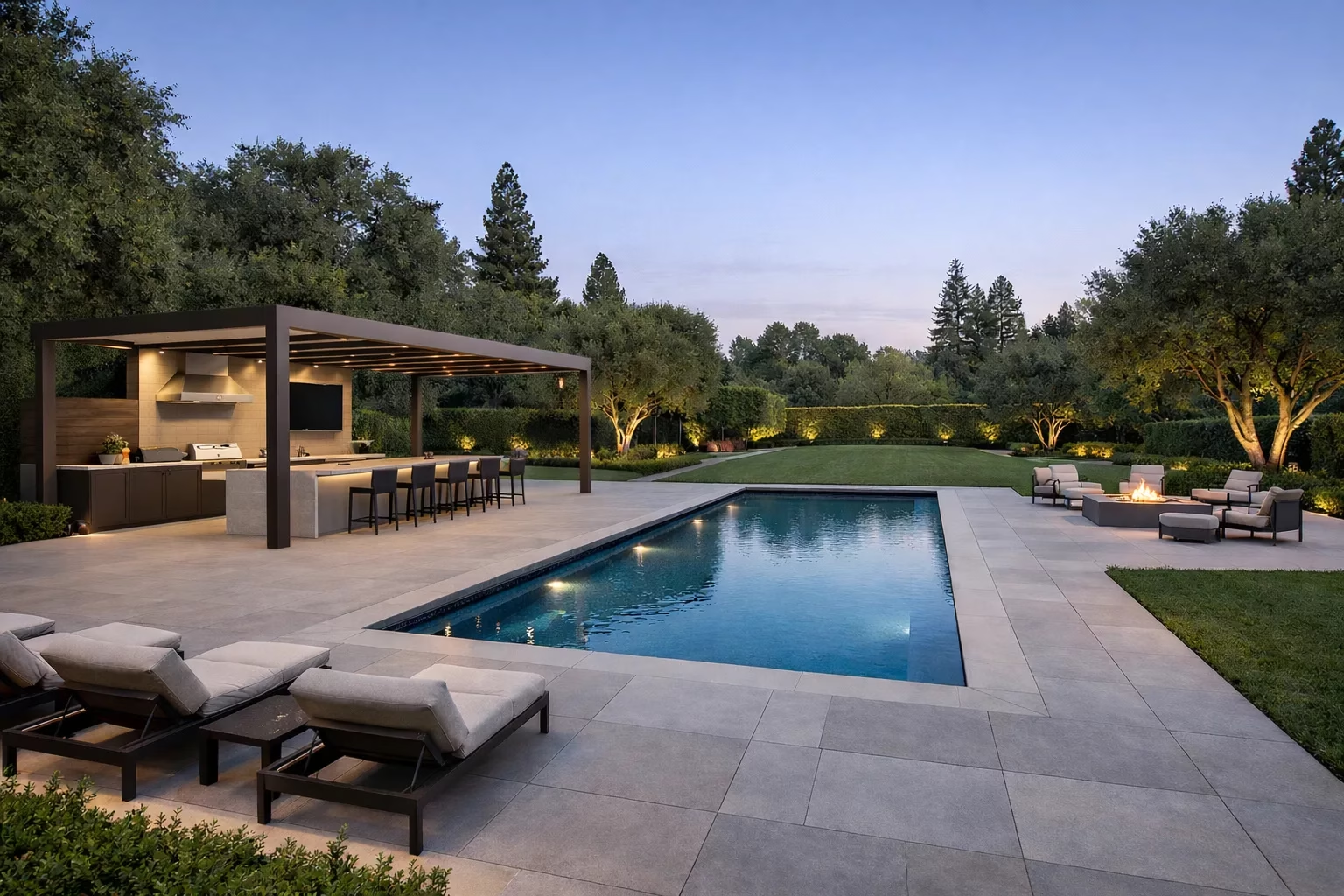


Project Fit & Investment Tiers
Sequoia Outdoor specializes in complete outdoor environments on the Peninsula. We do not provide standalone shade sail installations or minor pergola repairs.
- Minimum Project Engagement: $25,000
- Published completed projects: $50,000 to $431,000 on this site, each shown with its scope and rounded investment
- On-Time Guarantee: Applies to all comprehensive design-build contracts.
As a Peninsula homeowner, you understand that a well-built pergola is a signature element of sophisticated outdoor living. However, an architectural pergola in Atherton or Hillsborough is not a bolt-on kit. It is a permanent structure subject to strict wind load engineering, seismic standards, and property line setbacks. Upgrading to a premium automated louvered system requires deep concrete pier footings and heavy electrical trenching for motors, heaters, and lighting. This 2026 guide shares exactly what it takes to get the structural base, utility integration, and finish level right the first time.
Educational only (not engineering advice). Every site is unique. Always verify structural requirements with a licensed civil engineer and your local Authority Having Jurisdiction (AHJ).
TL;DR: Peninsula Pergola Costs (2026)
- $50k and up: Main entertaining pergola featuring a premium automated louvered system, deep engineered concrete footings, and integrated lighting.
- $75k and up: Large custom pergola layouts with fully retractable louvers, integrated infrared heating, ceiling fans, and robust subsurface drainage.
- $120k and up: Estate-scale architectural shading crossing multiple zones, integrated with high-end outdoor kitchens, masonry columns, and smart-home weather automation.
- Biggest Cost Drivers: Roof type (fixed vs. motorized louvered), structural footprint, utility trenching, custom masonry bases, and local permitting.
- The Sequoia Difference: We manage the entire CSLB-compliant structural build, from deep pier excavation to final electrical sign-off.
Costs: Premium Pergola Programs (2026)
On the Peninsula, a structural pergola’s cost is driven heavily by the invisible elements: the volume of concrete required for wind shear footings, the complexity of the roof mechanics, and the utility trenching required to power it.
| Program Level | Typical Planning Range | What Is Included |
| Premium Motorized Pergola | $50k and up | Main entertaining space, high-end automated louvered system, deep engineered footings, dedicated electrical circuit, and integrated LED lighting. |
| Expanded Custom Structure | $75k and up | Large footprint utilizing fully retractable louvers, integrated high-draw infrared heaters, heavy structural posts, and concealed internal post drainage. |
| Estate Architectural Shading | $120k and up | Systems spanning multiple living zones, custom masonry column bases, wind-sensor automation, and integration with major hardscape programs. |
Cost Adders: What Escalates Pergola Budgets
These features transform a basic shade cover into a sophisticated, all-weather entertaining asset.
| Critical Adder | Why It Increases Cost | Where It Goes Wrong |
| Roof Mechanics | Automated louvered roofs (bioclimatic) require complex motors, weather sensors, and strict electrical conduit routing. | Failing to plan for roof drainage, allowing water to dump directly onto the patio seating when louvers open. |
| Wind Load Footings | When louvers close during a storm, the structure acts like a sail. Deep concrete piers are required to resist uplift. | Bolting the structure directly to a thin patio slab, leading to structural failure or permit rejection. |
| Integrated Utilities | Trenching high-voltage lines for dual 6000-watt heaters requires dedicated sub-panels and meticulous phase planning. | Treating electrical as an afterthought, resulting in exposed conduit bolted to the outside of the premium columns. |
Spec Tiers: How Premium Pergolas Stay Premium
The internal engineering of your base, drainage, and roof system decides how the pergola performs over the next decade of heavy Peninsula use.
| System Element | Common Approach | The Sequoia Spec |
| Base Preparation | Surface-level bolts into standard 4-inch unreinforced concrete. | Deep over-excavation, engineered rebar cages, and structural concrete pier footings. |
| Drainage System | Basic surface slope hoping water rolls away from the posts. | Internal post drains tied directly into a subsurface PVC drain pipe before hardscape is laid. |
| Roof System | Fixed wooden slats or basic manually cranked louvers. | Premium automated louvered systems with smart-device controls and hidden motors. |
Drainage & Utilities Operational Flow
Modern pergolas require heavy integration. The clean, professional method is to trench once, verify all utilities and drains, and then build the hardscape over it.
Pro Tip: The Trench Once Strategy
- Water: Internal roof gutter systems and post drains are mapped to a final discharge path before the patio base is imported.
- Power: Dedicated circuits for louver motors, integrated LED lighting, and high-wattage heaters are safely trenched.
- Service Access: Junction boxes and cleanouts remain accessible without requiring masonry demolition in the future.
Permits, Setbacks, and HOA Realities
Permitting is heavily jurisdiction-specific across the Peninsula. A permanent structural pergola is typically subject to city building codes, depending on jurisdiction, size and whether it is attached to the house.
Common 2026 Permit Triggers: Erecting freestanding structures, pouring structural footings, running new electrical circuits, and navigating specific property line setback rules. Sequoia Outdoor holds an active Class A General Engineering license, allowing us to manage the entire structural, electrical, and regulatory process legally and efficiently.
Protect Your Estate: Sequoia’s Due Diligence Advantage
Drawing on years of experience managing complex Peninsula projects, we built Sequoia to eliminate the structural and financial risks you cannot see.
What to Ask Any Contractor, Including Us
- Excess Liability Insurance: A standard $1M policy is not enough for an Atherton estate. We carry a $5,000,000 Umbrella Policy to protect your assets.
- Documented Subsurface Proof: Our Project Managers capture mandatory photo and video proof of the footing depth, rebar, and utility trenches before concrete is poured.
- The On-Time Guarantee: Projects are backed by Sequoia’s written On-Time Guarantee. The completion date is set after the pre-construction walkthrough, and schedule credits apply to qualifying company-controlled delays under the published terms.
Timeline: Structural Engineering & Permitting
- Design & Engineering: 2 to 8 weeks depending on the complexity of the roof mechanics and custom spans.
- City Permits & HOA Approvals: 4 to 12+ weeks based heavily on specific jurisdiction review cycles.
- Construction Execution: 4 to 12+ weeks. The process accelerates once the footings are poured and the custom structure is fabricated and delivered.
Quote Checklist: Comparing Pergola Bids
If the footing and utility details are not explicitly written in the proposal, they will not be built.
| Contract Item | What to Demand in Writing | The Red Flag |
| Footing Specifications | Explicit callouts for concrete pier depth and width to support high wind loads. | Assuming the posts can just be bolted to the existing patio pavers. |
| Utility Integration | Clear plan for concealing conduit and wiring inside the support columns. | Wiring treated as an afterthought, leading to exposed surface-mounted electrical conduit. |
| Permits & Approvals | Clear legal language dictating who handles the city permitting and inspections. | The contract explicitly states the homeowner is responsible for all approvals. |
Qualifying Questions (Speeds Up Your Estimate)
- City & Neighborhood: Atherton, Hillsborough, Portola Valley, Woodside, Menlo Park, Palo Alto, Los Altos Hills, Saratoga, Monte Sereno, Los Gatos.
- Structure Scope: Automated louvers, fixed roof, integrated lighting, heating, ceiling fans, structural footings.
- Timeline: Ideal start date and any strict deadlines.
- Project Budget Range: $50k and up.
- HOA: Yes or no, and known property line setbacks.
Frequently Asked Questions
What is Sequoia’s minimum project size?
Our minimum engagement is $25,000. We design and build permanent, architectural pergolas as part of comprehensive outdoor living programs. We do not provide basic shade sails or minor repair work.
Does the On-Time Guarantee apply to pergola projects?
Yes. Our On-Time Guarantee applies to all comprehensive design-build contracts. We account for custom fabrication lead times and complex permit cycles during the planning phase to lock in a confirmed timeline.
Do I need permits for an engineered pergola on the Peninsula?
Almost always. Erecting structural posts, pouring deep concrete footings, and running dedicated electrical circuits trigger mandatory city safety reviews. We manage this entire process.
How long does an architectural pergola take to build?
The engineering and permit approval phase requires several weeks. Once the permit is pulled, the heavy trenching for footings and utilities is executed systematically before the custom structure arrives for installation.
Service Area (Peninsula Focus)
We serve San Mateo and Santa Clara Counties, heavily focused on navigating the strict regulations of ultra-affluent pockets.
San Mateo County: Atherton (94027), Hillsborough (94010, 94062), Portola Valley (94028), Menlo Park (94025), San Carlos (94070), Woodside, and Emerald Hills.
Santa Clara County: Los Altos Hills (94022, 94024), Los Altos (94022, 94024), Saratoga (95070), Monte Sereno (95030), Palo Alto (94301, 94304, 94306), Cupertino (95014), Los Gatos (95030, 95032).
Secure Your Estate With Engineered Precision
We plan the entire system first: structural wind loads, roof drainage, electrical routing, and CSLB-compliant scope documentation. Then we execute with real-time milestone tracking and a contracted completion date, set after the pre-construction walkthrough.