
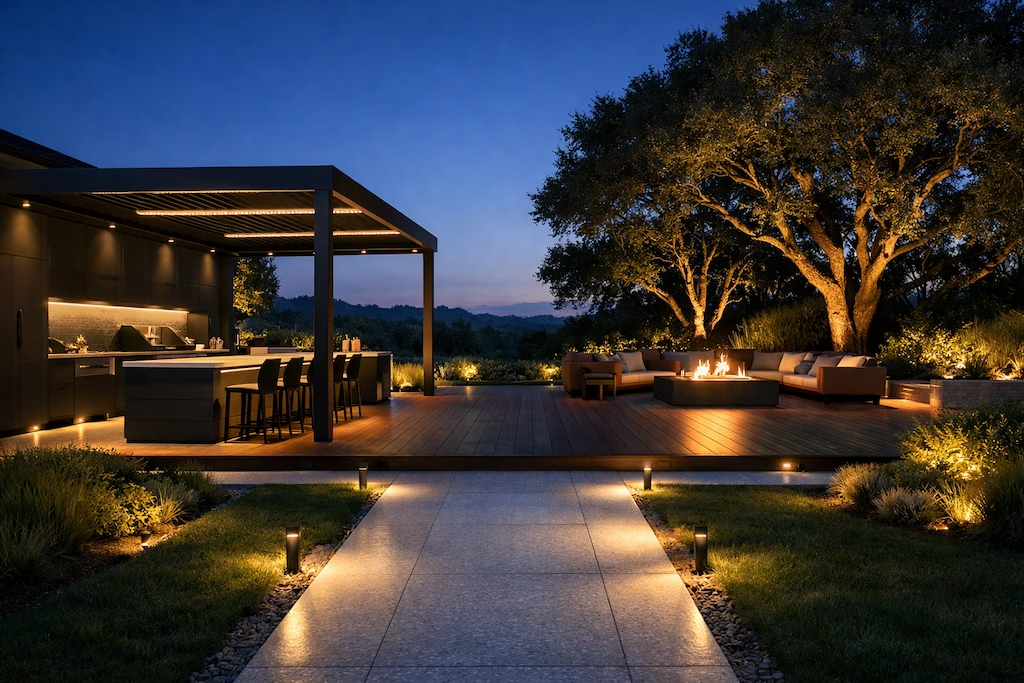


Project Fit & Investment Tiers
Sequoia Outdoor specializes in complete outdoor environments on the Peninsula. We do not provide minor fixture repairs or standalone bulb replacements.
- Minimum Project Engagement: $25,000
- Published completed projects: $50,000 to $431,000 on this site, each shown with its scope and rounded investment
- On-Time Guarantee: Applies to all comprehensive design-build contracts.
In Atherton, Woodside, and Los Altos Hills, a poorly engineered lighting system is not just an eyesore; it is an electrical hazard. Standard landscapers routinely bury cheap, unrated wire directly in wet clay and overload basic transformers, causing immediate voltage drops and premature fixture burnouts. Furthermore, California’s Title 24 Energy Code and CALGreen shielding requirements strictly govern how exterior spaces can be illuminated. This 2026 guide reveals the true costs of engineering a code-compliant, low-voltage architectural lighting system built to last.
Educational only (not engineering advice). Every site is unique. Always verify electrical requirements with a licensed contractor and your local Authority Having Jurisdiction (AHJ).
TL;DR: Peninsula Outdoor Lighting Costs (2026)
- $25k and up: Premium layered system featuring solid brass fixtures (uplighting, pathway, and wash), oversized multi-tap transformers, and integrated smart controls.
- $45k and up: Extensive estate footprint combining low-voltage landscape lighting with line-voltage structural lighting (pavilions, kitchens) and dedicated sub-panels.
- $75k and up: Fully automated architectural illumination, highly customized integrated masonry lighting, Title 24 compliance engineering, and trench-once utility mapping.
- Biggest Cost Drivers: Total fixture count, material tier (solid brass/copper vs. aluminum), complex conduit runs under existing hardscape, and smart home automation integration.
- The Sequoia Difference: We calculate voltage drops across every single wire run and utilize direct-burial, marine-grade splices to ensure absolute system stability.
Costs: Outdoor Lighting Programs (2026)
You cannot accurately price a lighting system simply by counting the bulbs. The true investment on the Peninsula lies in the heavy electrical infrastructure, the capacity of the stainless-steel transformers, and the physical trenching required to lay code-compliant conduit across an expansive property.
| Program Level | Typical Planning Range | Core Scope Included |
| Premium Layered Illumination | $25k and up | Solid brass directional uplights for mature trees, soft pathway illumination, integrated hardscape wall washes, multi-tap transformers, and smartphone controls. |
| Structural Integration Program | $45k and up | Combining low-voltage landscape arrays with line-voltage (120V) power trenched to remote pavilions or outdoor kitchens. Often requires upgrading the home’s main panel. |
| Full Estate Automation | $75k and up | Vast acreage coverage utilizing multiple zoned transformers, custom under-cap masonry lighting, automated Title 24 compliance sensors, and full A/V integration. |
Cost Adders: What Escalates Lighting Budgets
These specific variables dictate the complexity of the electrical engineering and dramatically shift the project timeline.
| Critical Adder | Why It Increases Cost | Where It Goes Wrong |
| Trenching & Conduit | Running wire safely across large estates or beneath existing concrete requires heavy machinery and rigid PVC conduit mapping. | Directly burying cheap wire a few inches deep, leaving it exposed to shovels and rodent damage. |
| Voltage Drop Corrections | As wire runs get longer, power drops. Complex systems require heavier-gauge wire (10/2) and multi-tap transformers to ensure the furthest light shines just as brightly as the closest. | Daisy-chaining 20 lights on a single thin wire, resulting in dim, flickering fixtures at the end of the line. |
| Fixture Metallurgy | Solid cast brass and heavy copper fixtures will never rust, corrode, or chip. They are lifetime investments compared to painted metals. | Installing cheap aluminum fixtures that oxidize and physically crumble within three Peninsula winters. |
Spec Tiers: How Estate Lighting Prevents Failure
The invisible infrastructure, how the wires are joined, protected, and powered, determines if your system survives the wet season.
| System Element | Common Approach | The Sequoia Spec |
| Wire Splices | Basic plastic wire nuts wrapped in electrical tape, allowing water to immediately penetrate and short the circuit. | Silicone-filled, direct-burial waterproof connectors ensuring an absolutely watertight seal underground. |
| Transformer Capacity | Maxing out a single, cheap transformer to 100% capacity, guaranteeing it will overheat and fail. | Sizing heavy-duty stainless transformers so they never run above 80% capacity, ensuring cool operation and long life. |
| Hardscape Integration | Jamming wires haphazardly between paving stones, making them impossible to service without demolition. | Pouring structural conduit sleeves beneath all hardscape prior to construction for clean, future-proof access. |
Drainage & Utilities Operational Flow
Lighting and drainage are intrinsically linked. If a yard is not properly graded, water will pool around junction boxes and transformers, destroying the electrical system.
Pro Tip: The Trench Once Strategy
- Conduit Mapping: All line-voltage (120V) and low-voltage (12V/15V) lighting conduit must be trenched and mapped simultaneously with the yard’s primary drainage pipes.
- Elevation Control: We plan the landscape grading so that water actively flows away from all buried electrical junctions and transformer mounting posts.
Permits, Title 24, and HOA Realities
California possesses the most aggressive electrical and energy codes in the nation. In jurisdictions like Menlo Park and Portola Valley, outdoor lighting is heavily scrutinized.
Common 2026 Permit Triggers: Running new dedicated circuits, upgrading a main electrical panel, or installing line-voltage fixtures on a pavilion will always trigger strict city inspections. Furthermore, California’s CALGreen code (Title 24, Part 11) mandates specific shielding on exterior fixtures to prevent “sky glow” and light trespass onto neighboring estates.
Sequoia Outdoor manages this entire regulatory process. We hold an active Class A General Engineering license, the classification under which we contract for and build heavy electrical and infrastructure projects across the Peninsula.
Protect Your Estate: Sequoia’s Due Diligence Advantage
Most contractors rely on flashy fixtures to distract from their lack of electrical expertise. We built Sequoia to provide absolute operational safety and transparency.
What to Ask Any Contractor, Including Us
- Excess Liability Insurance: We carry a $5,000,000 umbrella policy above our general liability coverage, above the $2,000,000 general liability limit.
- Documented Subsurface Proof: Our Project Managers capture mandatory photo and video proof of the trenching depth, conduit runs, and waterproof splices before the soil is backfilled.
- The On-Time Guarantee: We put a written completion guarantee in the contract. If our internal scheduling causes a delay, we provide financial compensation.
Timeline: Electrical Engineering Scheduling
- Design & Utility Definition: 2 to 6 weeks depending on fixture selection and automated control requirements.
- Engineering and Permits: 3 to 10+ weeks if the project requires line-voltage trenching or main panel upgrades.
- Construction Execution: 1 to 6 weeks of active installation, meticulously sequenced to occur before hardscape base prep and after heavy excavation.
Quote Checklist: Comparing Lighting Bids
If the electrical specifications are not written into the contract, you cannot tell whether the transformer, wire gauge and splices were sized for the run.
| Contract Item | What to Demand in Writing | The Red Flag |
| Wiring & Transformers | Explicit callouts for transformer wattage capacity, wire gauge (e.g., 10/2 or 12/2), and waterproof splice types. | System infrastructure is treated as a vague line item. |
| Fixture Metallurgy | Demand solid cast brass or copper fixtures with stated IP (waterproof) ratings. | Quoting generic “aluminum” or “painted metal” fixtures. |
| Permits & Approvals | Clear legal language dictating who handles the city permitting and electrical inspections. | The contract explicitly states the homeowner is responsible for all permits. |
Qualifying Questions (Speeds Up Your Estimate)
- City & Neighborhood: Atherton, Hillsborough, Portola Valley, Woodside, Menlo Park, Palo Alto, Los Altos Hills, Saratoga, Monte Sereno, Los Gatos.
- Scope: Solid brass fixtures, pathway lighting, architectural uplighting, smart home integration, hardscape conduit.
- Timeline: Ideal start date and any strict deadlines.
- Project Budget Range: $25k and up.
- HOA: Yes or no, and known lighting or “dark sky” constraints.
Frequently Asked Questions
What is Sequoia’s minimum project size?
Our minimum engagement is $25,000. We design and install comprehensive architectural lighting systems as part of larger outdoor living programs. We do not provide standalone bulb replacements or minor repairs.
Does the On-Time Guarantee apply to lighting projects?
Yes. Our On-Time Guarantee applies to all comprehensive design-build contracts. We account for custom fixture lead times and complex permit cycles during the planning phase to lock in a confirmed timeline.
Do I need permits for outdoor lighting on the Peninsula?
Often, yes. While basic low-voltage swaps might bypass review, running new line-voltage circuits, trenching across property lines, or integrating power into a new structural pavilion triggers strict city safety reviews. We manage this process for you.
How long does an engineered lighting project take?
Timelines heavily depend on approvals and scope. Many programs include several weeks of planning and permitting, followed by an active construction phase. Projects move fastest when fixture selections and utility routes are locked in early.
Service Area (Peninsula Focus)
We serve San Mateo and Santa Clara Counties, heavily focused on navigating the strict regulations of ultra-affluent pockets.
San Mateo County: Atherton (94027), Hillsborough (94010, 94062), Portola Valley (94028), Menlo Park (94025), San Carlos (94070), Woodside, and Emerald Hills.
Santa Clara County: Los Altos Hills (94022, 94024), Los Altos (94022, 94024), Saratoga (95070), Monte Sereno (95030), Palo Alto (94301, 94304, 94306), Cupertino (95014), Los Gatos (95030, 95032).
Ready for Premium Architectural Illumination?
We plan the entire system first: conduit mapping, transformer loads, Title 24 compliance, and CSLB-compliant scope documentation. Then we execute with real-time milestone tracking and a contracted completion date, set after the pre-construction walkthrough.