

Project Fit & Investment Tiers
Sequoia Outdoor specializes in comprehensive, engineered outdoor environments for Peninsula estates. We do not provide prefabricated fireplace deliveries or minor gas line repairs.
- Minimum Project Engagement: $50,000
- Typical Elite Programs: $100,000 to $300,000
- Estate-Scale Master Plans: $300,000 to $500,000+
- On-Time Guarantee: Applies to all comprehensive design-build contracts.
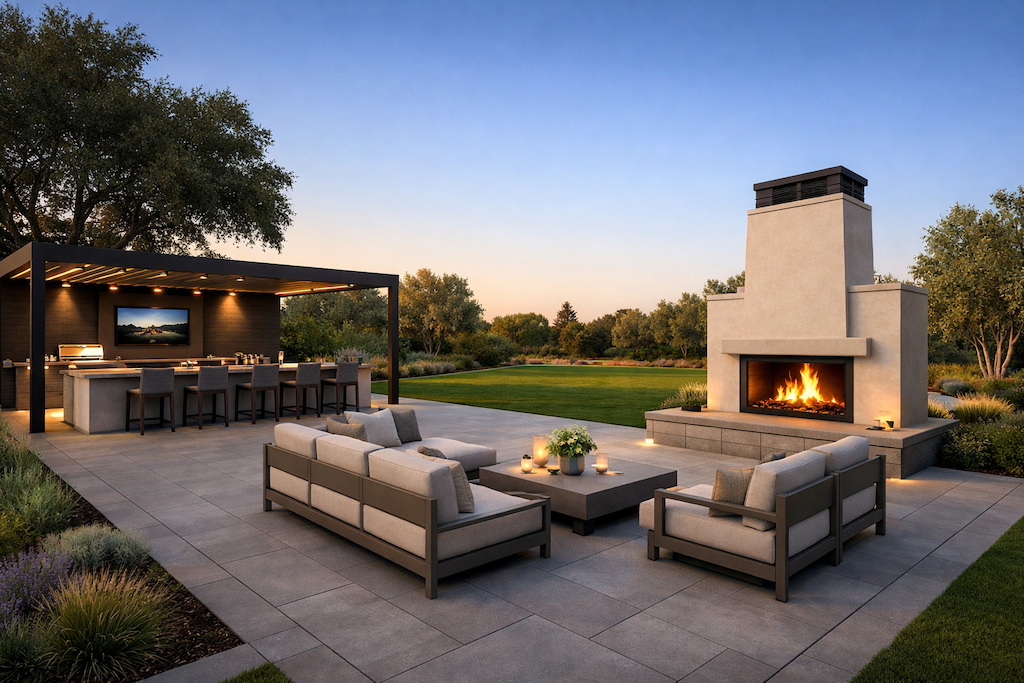
On the Peninsula, an architectural outdoor fireplace is not a landscaping feature—it is a heavy civil structure. In affluent communities like Atherton, Hillsborough, and Portola Valley, building a massive vertical chimney triggers intense scrutiny from city inspectors regarding seismic shear loads, California Fire Code clearances, and strict WUI (Wildland-Urban Interface) regulations. A structural fireplace requires deep concrete footings, CMU block reinforcement, and high-capacity gas trenching directly from your home’s main meter. This 2026 guide reveals the true costs of engineering a permanent, code-compliant outdoor fireplace that anchors your estate.
Educational only (not engineering advice). Every site is unique. Always verify structural requirements with a licensed civil engineer, plumber, and your local Authority Having Jurisdiction (AHJ).
TL;DR: Peninsula Outdoor Fireplace Costs (2026)
- $50k to $95k: Custom architectural fireplace integrated into a new primary hardscape, featuring CMU block construction, deep structural footings, hard-piped natural gas, and premium stone veneer.
- $95k to $150k: Expanded structural footprint with extensive masonry seating walls, custom mantel detailing, integrated low-voltage lighting, and complex gas line trenching.
- $150k to $250k+: Massive estate-scale structures (double-sided or towering chimneys), integrated within a solid-roof pavilion, requiring rigorous geotechnical and wind-load engineering.
- Biggest Cost Drivers: Footing depth (seismic requirements), chimney height, gas line distance from meter, masonry material tier, and strict property line setback permits.
- The Sequoia Difference: We manage the entire CSLB-compliant structural build, calculating massive BTU loads before trenching and ensuring all Fire Code clearances are met flawlessly.
Costs: Structural Fireplace Programs (2026)
A true outdoor fireplace is vastly more complex than a standard fire pit. The investment is driven by the massive point loads the chimney places on the foundation, the structural masonry required to build it safely, and the heavy utility trenching needed to power a high-BTU burner.
| Program Level | Typical Planning Range | Core Scope Included |
| Premium Custom Fireplace | $50k to $95k | Structural CMU block construction integrated into a new hardscape, deep concrete footings, hard-piped natural gas line, and premium stone veneer. |
| Expanded Architectural Feature | $95k to $150k | Massive structural footprint featuring extensive masonry seating walls, heavy stone mantels, integrated low-voltage lighting, and dedicated drainage systems. |
| Estate Structural Focal Point | $150k to $250k+ | Towering double-sided chimneys, integration directly beneath a new solid-roof pavilion, rigorous geotechnical engineering, and high-capacity gas upgrades. |
Cost Adders: What Escalates Fireplace Budgets
These specific variables dictate the complexity of the structural engineering and the duration of the permit process.
| Critical Adder | Why It Increases Cost | The Common Competitor Mistake |
| Seismic & Wind Load Footings | A tall masonry chimney acts like a sail. It requires massive, deeply excavated concrete footings with heavy rebar cages to meet California seismic code. | Building a heavy block chimney on a standard 4-inch patio slab, guaranteeing severe structural cracking and settlement. |
| Gas Line Upgrades & Trenching | A large high-BTU burner requires a dedicated, oversized gas line trenched deeply from the main house meter to ensure proper flame height. | Tying a new 250,000 BTU burner into an existing 1/2-inch BBQ stub, resulting in a weak, pathetic flame. |
| Masonry Material Tier | Custom-cut natural stone veneers, herringbone firebox patterns, and heavy stone mantels require highly skilled, meticulous masonry labor. | Gluing cheap manufactured stone to an un-level wood frame. |
Spec Tiers: How Estate Fireplaces Are Actually Built
The interior structure of your fireplace determines if the veneer will crack and if the structure will remain plumb and level over the decades.
| System Element | Standard Contractor Baseline | The Sequoia Estate-Grade Spec |
| Internal Structure | Flimsy galvanized metal studs wrapped in thin cement board that inevitably rusts and warps. | Permanent CMU (Concrete Masonry Unit) block walls built directly on a reinforced concrete footing. |
| Structural Footings | A shallow trench filled with unreinforced concrete. | Engineer-specified footing depth based on soil reports, featuring heavy rebar grids to handle massive point loads. |
| Ignition System | Basic match-lit systems requiring a long lighter and manual valve turning. | Fully automated electronic ignition systems (AWEIS) operated by remote or smart-home integration. |
Gas & Utilities Operational Flow
A high-end fireplace requires precise load calculations. If the gas line is not meticulously sized and trenched before the patio base is laid, the project will suffer costly delays.
Pro Tip: The Trench Once Strategy
- Gas Calculations: We calculate the total simultaneous BTU draw of the fireplace and any adjacent outdoor kitchen appliances to ensure the main line is correctly sized before trenching.
- Electrical Routing: If utilizing an electronic ignition system or integrating mantel lighting, dedicated low-voltage circuits are mapped and trenched to the main panel.
- Hardscape Drainage: The surrounding patio must be graded to move water strictly away from the massive foundation of the fireplace to prevent subgrade washouts.
Permits, Fire Code, and HOA Realities
The California Fire Code heavily regulates outdoor open flames. Due to severe air quality constraints and wildfire risks, many Peninsula jurisdictions strictly prohibit new wood-burning fireplaces, mandating clean-burning natural gas systems instead.
Common 2026 Permit Triggers: Building a heavy masonry structure and running new gas lines will always trigger a city building and plumbing permit. Furthermore, the Fire Code typically mandates a strict 10-foot clearance from the flame to any combustible structures (like your home or a wooden fence). The height of the chimney itself may also trigger specific property line setback rules.
Sequoia Outdoor manages this entire regulatory process. We hold an active Class A General Engineering license, ensuring we have the legal authority to design, permit, and construct heavy architectural elements across the Peninsula.
Protect Your Estate: Sequoia’s Due Diligence Advantage
Most contractors will gladly show you a shiny new burner. They will never show you the dangerous, undersized gas pipe or shallow foundation hidden beneath it. We built Sequoia to provide absolute operational safety and transparency.
The Elite Vetting Checklist: What You Must Demand
- Debt-Free Operations: Financial instability destroys projects. Sequoia is 100% debt-free. Your deposit is strictly allocated to your property.
- Excess Liability Insurance: We maintain a $5,000,000 Umbrella Policy to protect high-net-worth assets from catastrophic construction incidents, like gas line ruptures.
- Documented Subsurface Proof: Our Project Managers capture mandatory photo and video proof of the footing depth, rebar grids, gas line pressure testing, and CMU construction before anything is covered up.
- The On-Time Guarantee: We are the only firm with a written completion guarantee. If our internal scheduling causes a delay, we provide financial compensation.
Timeline: Architectural Fireplace Scheduling
- Design & Utility Definition: 2 to 8 weeks depending on layout complexity and material selection.
- Engineering and Permits: 4 to 12+ weeks as city inspectors review the structural seismic loads, gas line calculations, and property line setbacks.
- Construction: 4 to 12+ weeks of active installation, heavily dependent on the depth of utility trenching and custom masonry curing times.
Quote Checklist: Comparing Masonry Bids
If the internal structure and utility sizing are not explicitly detailed in the contract, you are guaranteed to receive a dangerous, settling structure.
| Contract Item | What to Demand in Writing | The Red Flag |
| Footing & Structure | Explicit callouts for engineered concrete footings and CMU block construction. | Building the fireplace out of wood framing or bolting it directly to thin patio pavers. |
| Gas Engineering | Detailed BTU calculations proving the main gas line can support the burner. | Assuming the existing 1/2-inch BBQ stub is sufficient for a massive fireplace burner. |
| Permits & Approvals | Clear legal language dictating who handles the city permitting and inspections. | The contract explicitly states the homeowner is responsible for all structural and gas permits. |
Qualifying Questions (Speeds Up Your Estimate)
- City & Neighborhood: Atherton, Hillsborough, Portola Valley, Woodside, Menlo Park, Palo Alto, Los Altos Hills, Saratoga, Monte Sereno, Los Gatos.
- Scope: Outdoor fireplace, hardscape integration, massive chimneys, gas line trenching, structural footings.
- Timeline: Ideal start date and any strict deadlines.
- Project Budget Range: $50k to $95k, $95k to $150k, $150k to $250k+.
- HOA: Yes or no, and known property line setbacks.
Frequently Asked Questions
What is Sequoia’s minimum project size?
Our minimum engagement is $50,000. We design and build permanent, architectural outdoor fireplaces as part of comprehensive outdoor living programs. We do not perform minor utility repairs or install pre-fab kits.
Does the On-Time Guarantee apply to fireplace builds?
Yes. Our On-Time Guarantee applies to all comprehensive design-build contracts. We account for custom burner lead times and complex structural permit cycles during the planning phase to lock in a confirmed timeline.
Do I need permits for an outdoor fireplace on the Peninsula?
Always. Trenching new gas lines, pouring heavy concrete footings, and building tall masonry structures trigger mandatory and strict city safety reviews. We manage this process completely.
How long does a custom fireplace take to build?
The engineering and permit approval phase requires several weeks. Once the permit is pulled, the heavy trenching for utilities and the curing of the CMU block foundation dictate the pace of the construction phase.
Service Area (Peninsula Focus)
We serve San Mateo and Santa Clara Counties, heavily focused on navigating the strict regulations of ultra-affluent pockets.
San Mateo County (Priority Clusters): Atherton (94027), Hillsborough (94010, 94062), Portola Valley (94028), Menlo Park (94025), San Carlos (94070), Woodside, and Emerald Hills.
Santa Clara County (Priority Clusters): Los Altos Hills (94022, 94024), Los Altos (94022, 94024), Saratoga (95070), Monte Sereno (95030), Palo Alto (94301, 94304, 94306), Cupertino (95014), Los Gatos (95030, 95032).
Secure Your Estate With Engineered Precision
We plan the entire system first: structural concrete footings, heavy gas line engineering, dedicated electrical circuits for ignition, CSLB-compliant scope documentation, and flawless masonry execution. Then we execute with real-time milestone tracking and a guaranteed completion date.