
Landscape design-build in Portola Valley, California
Landscape Design & Build in Portola Valley, CA
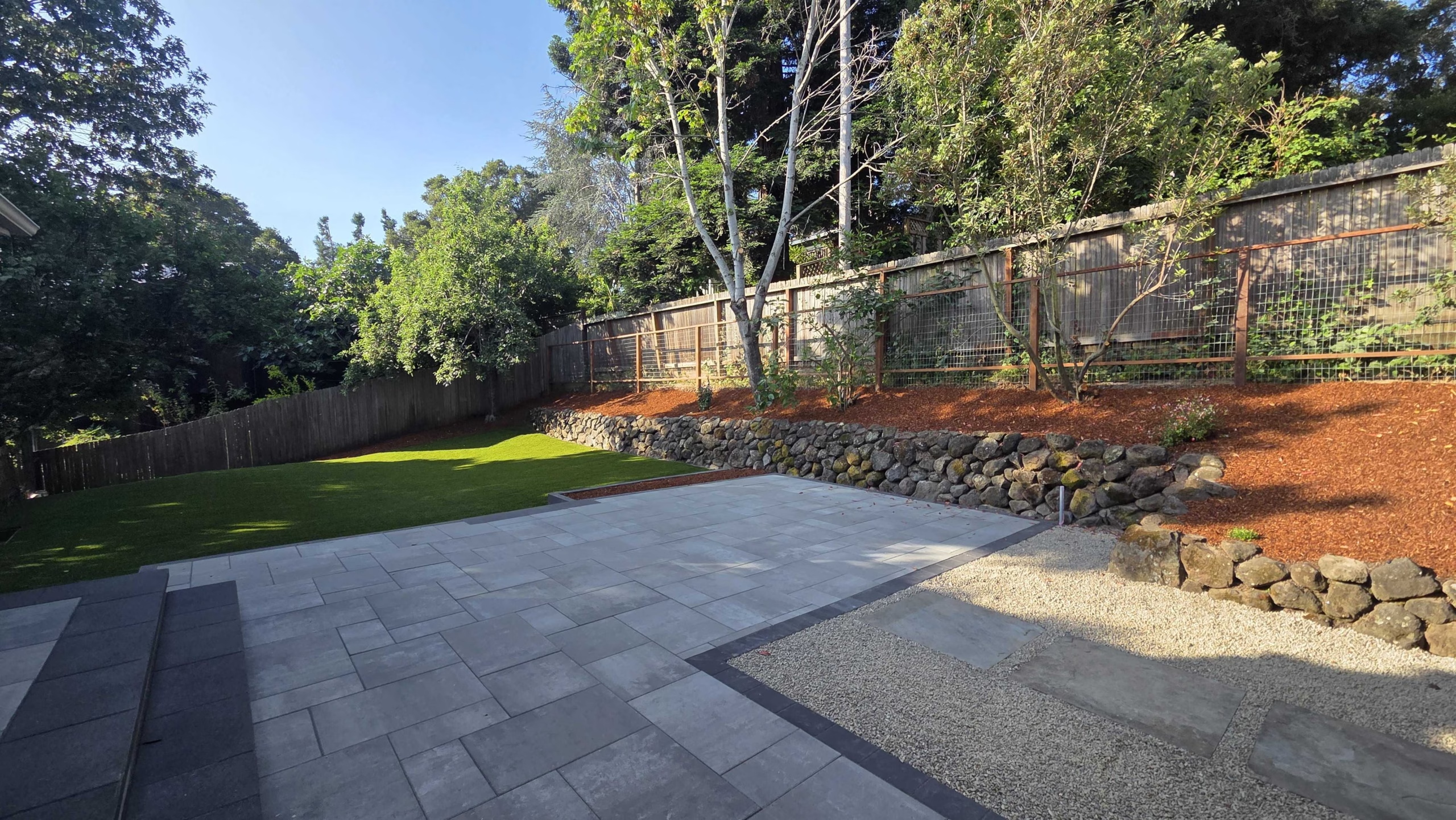
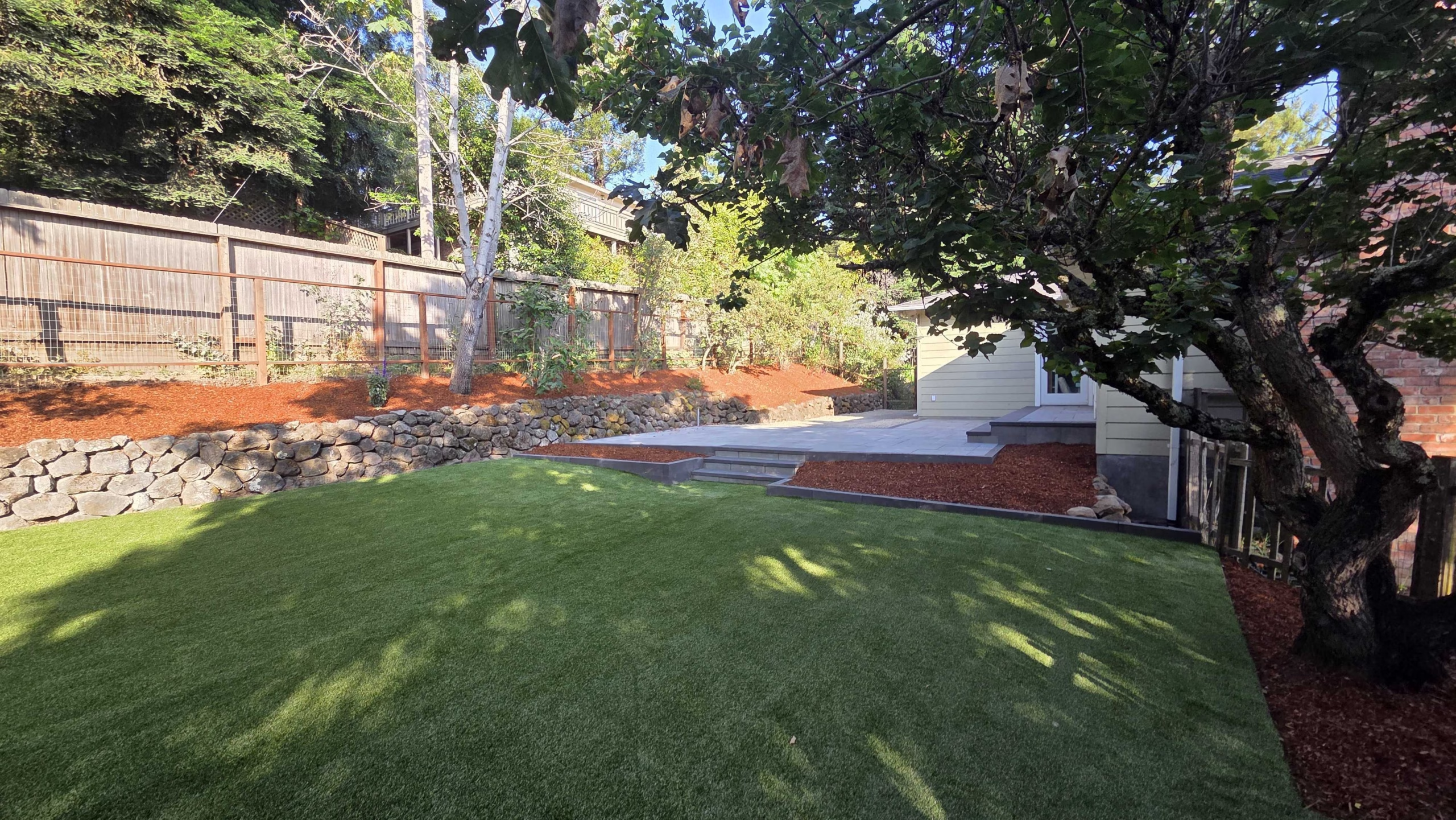
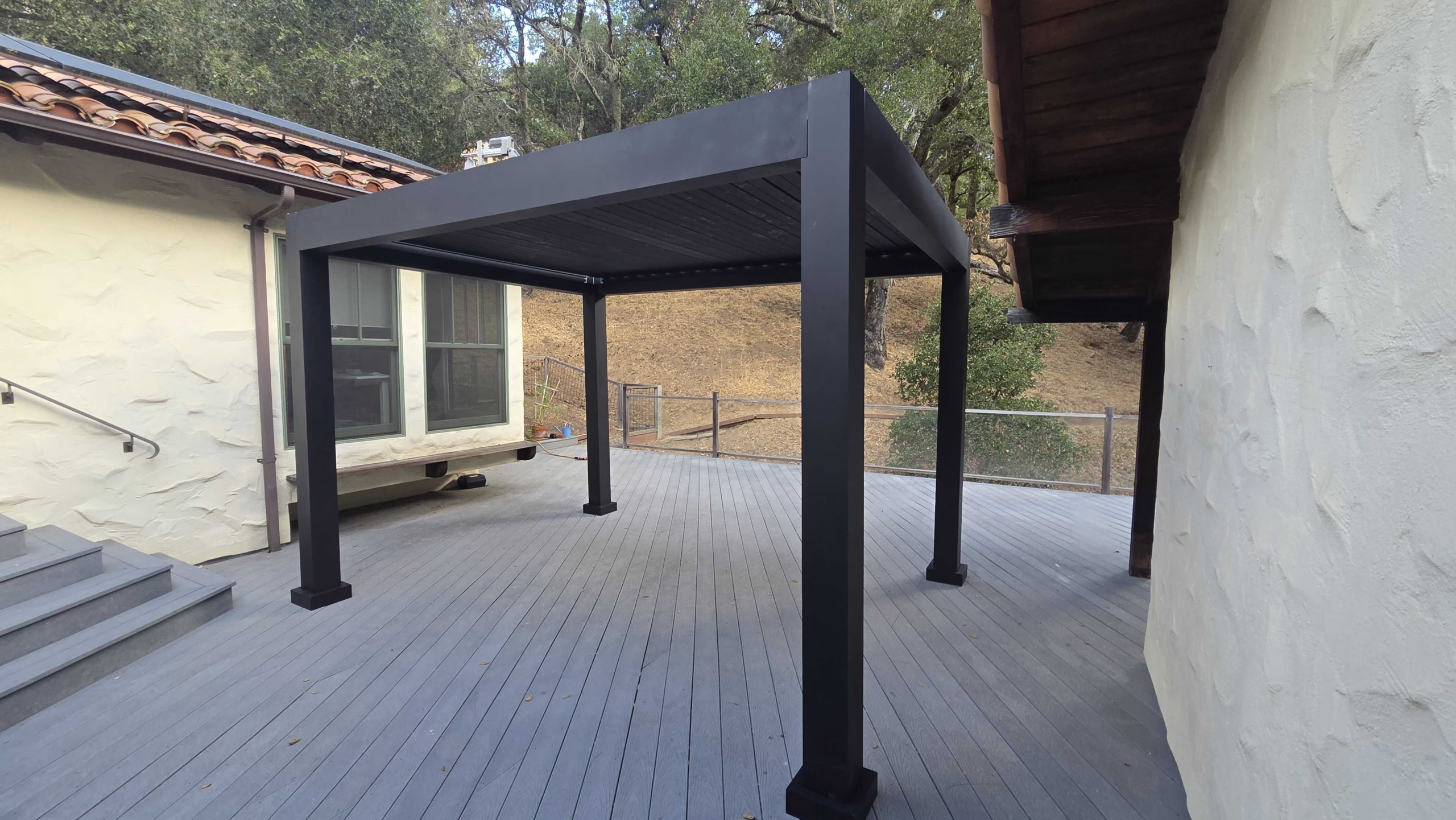
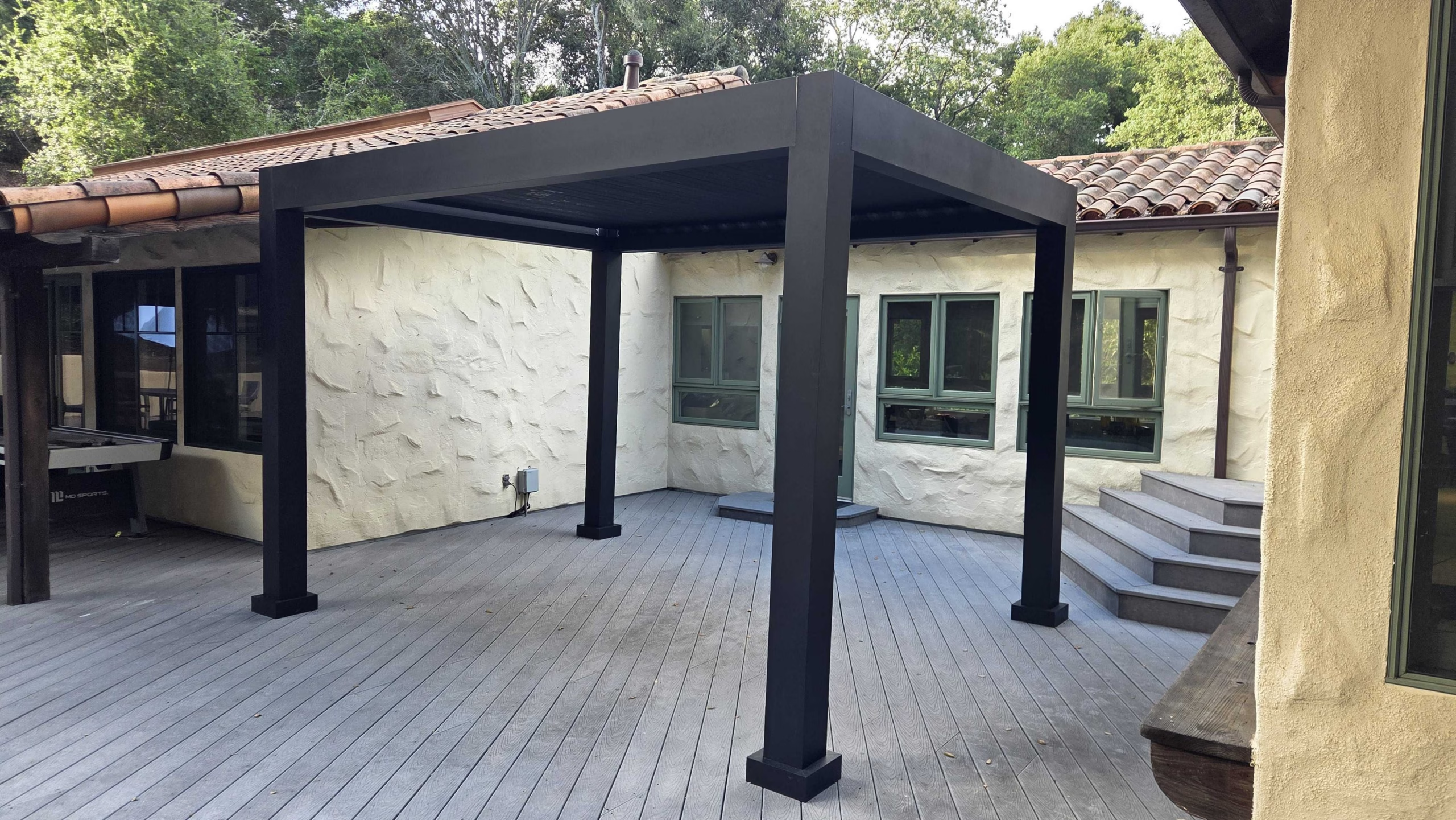
Portola Valley has more landscape rules than any other town on this site, and the rules are the point of it: open space, wildlife movement, dark skies and fire. Our project records show two completed Portola Valley construction projects, a turf lawn and paver patio under the oaks in 2025 and a black aluminum pergola over a deck the same summer, both photographed below. We design and build the whole yard as one coordinated project: pavers, walls and steps, decks and pergolas, outdoor kitchens, planting, drainage and lighting.
Before a Portola Valley design is drawn, four things are settled: which trees are significant (an oak at 36 inches around, a blue oak at 16), whether the earthwork needs a Site Development Permit, what kind of fence the zoning district allows, and what the Woodside Fire Protection District expects in the first five feet against the house. Whether you want a focused improvement or a full outdoor living build, the process begins with the site, your priorities and a realistic scope.
Construction projects start at $25,000. Design is quoted separately. Qualifying design fees may be credited toward construction.
Portola Valley snapshot
Service area
Portola Valley, Peninsula & South Bay
Completed Portola Valley construction projects
2, from company project records
Documented Portola Valley work
2 photographed builds; written case studies pending
Construction project minimum
$25,000
Review footprint
80 review listings and recommendations across six platforms as of 2026-08-30
Two Portola Valley Builds, Photographed on Site
The two completed Portola Valley construction projects in our records, each photographed after completion, with the completion month and, where the record gives it, the project size. Neither has a written case study yet, so no scope beyond the photographs and no price is quoted for either here; the pricing section below gives what our records show, and the case studies nearby carry published ranges because they have write-ups.
Why there is no Portola Valley range here. A published range on this site is the sum of a written-up project’s cost rows, rounded from its signed proposal. Neither of these has a write-up yet. Browse every documented Sequoia project.
Three published case studies in Atherton, Menlo Park and Los Altos Hills
Three towns on the same side of the Peninsula, each with its own tree, drainage and permit rules. Each range is the sum of that project’s published cost rows, rounded from its signed proposal: not Portola Valley pricing and not a quote for another property. See the full case-study library.
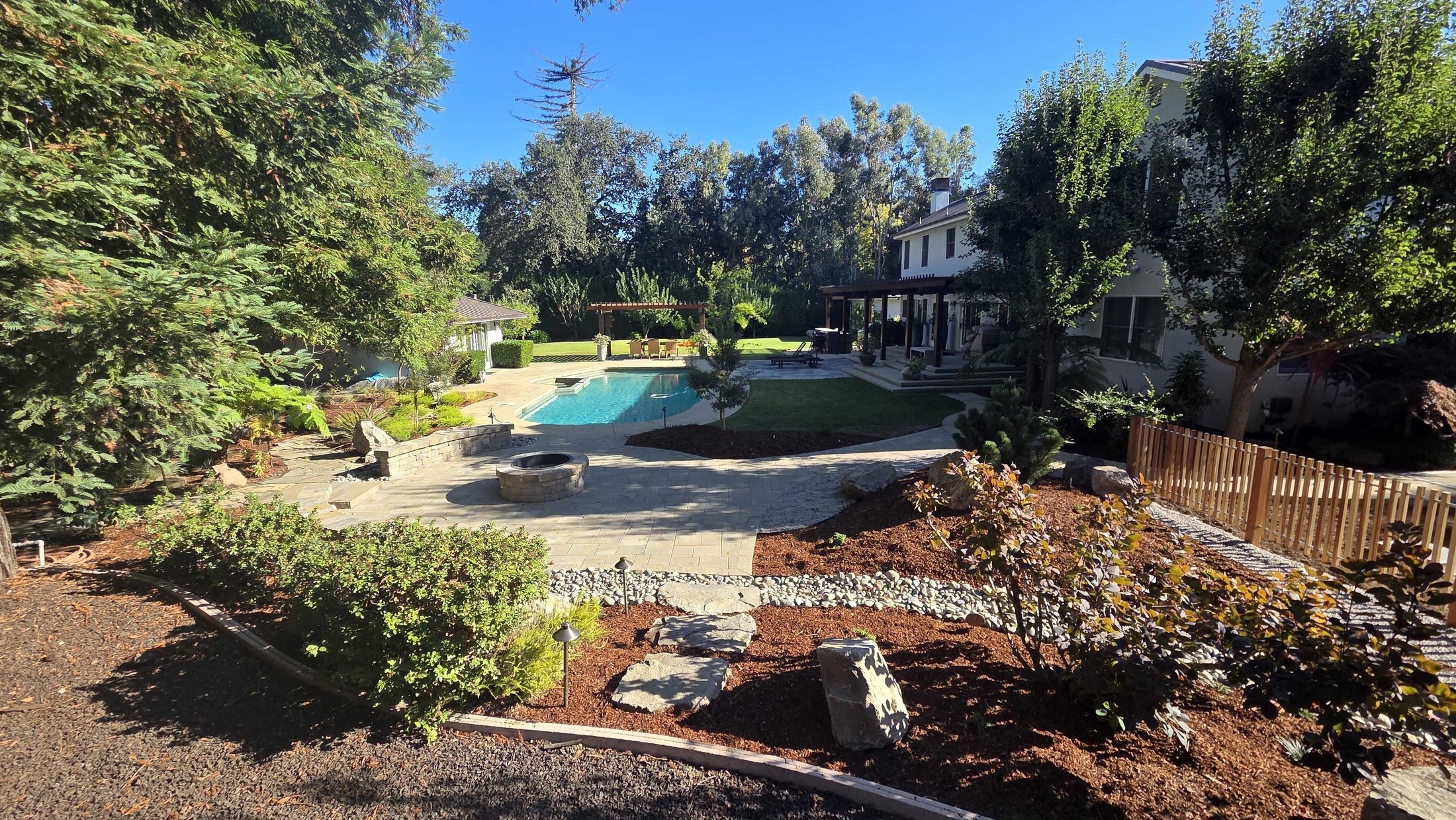 Atherton
Fire Pit Terrace, Cobble Rock Channel and Sport-Court Surround
Boulders and a cobble channel, a paver terrace, planting, lighting and a rebuilt fire pit around a sport court, completed December 2025.
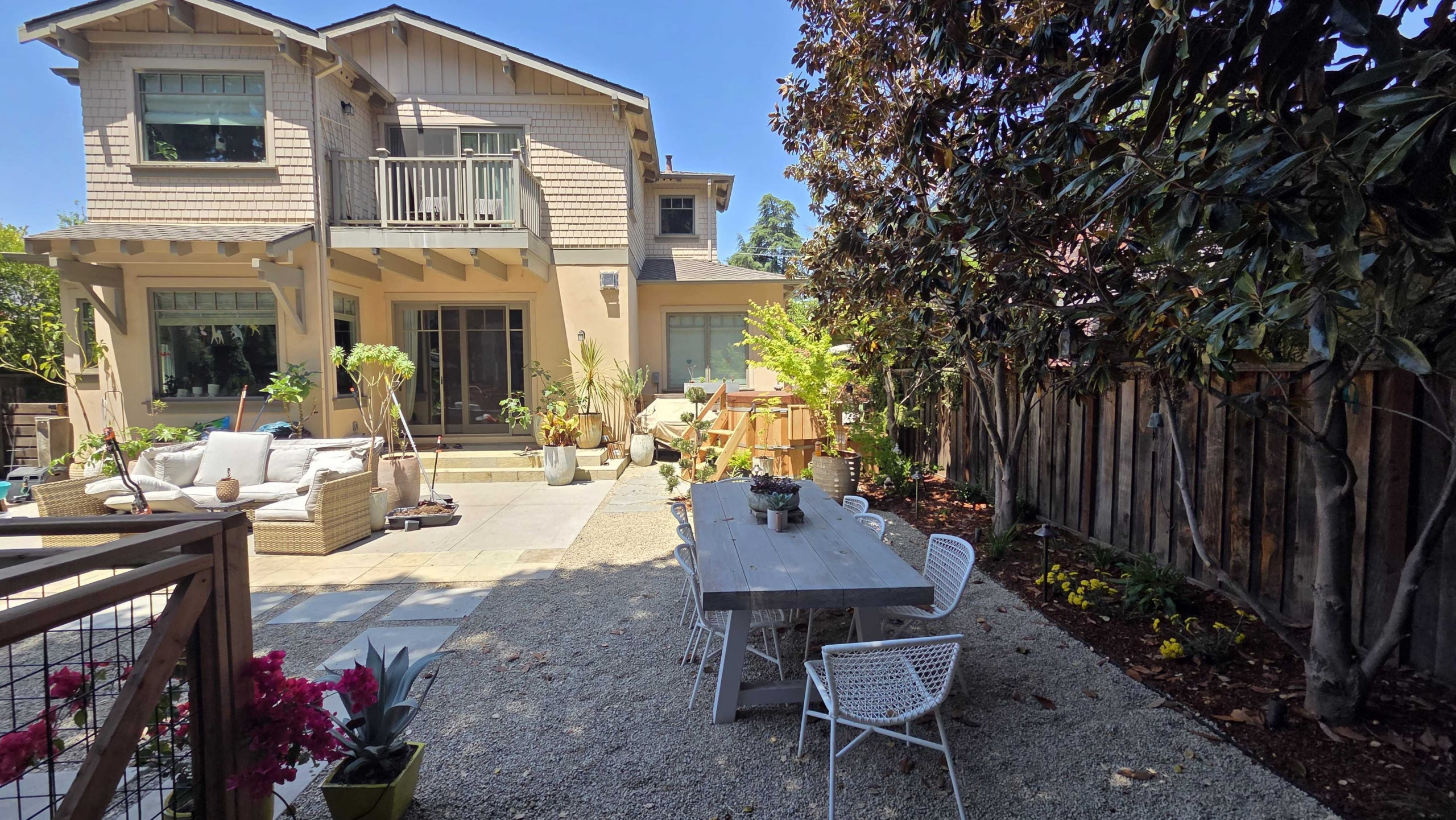 Menlo Park
Outdoor Living, Garden Paths and Greenhouse
Stone paths, lawn and planting, irrigation and drainage, a greenhouse water feature and landscape lighting, completed June 2025.
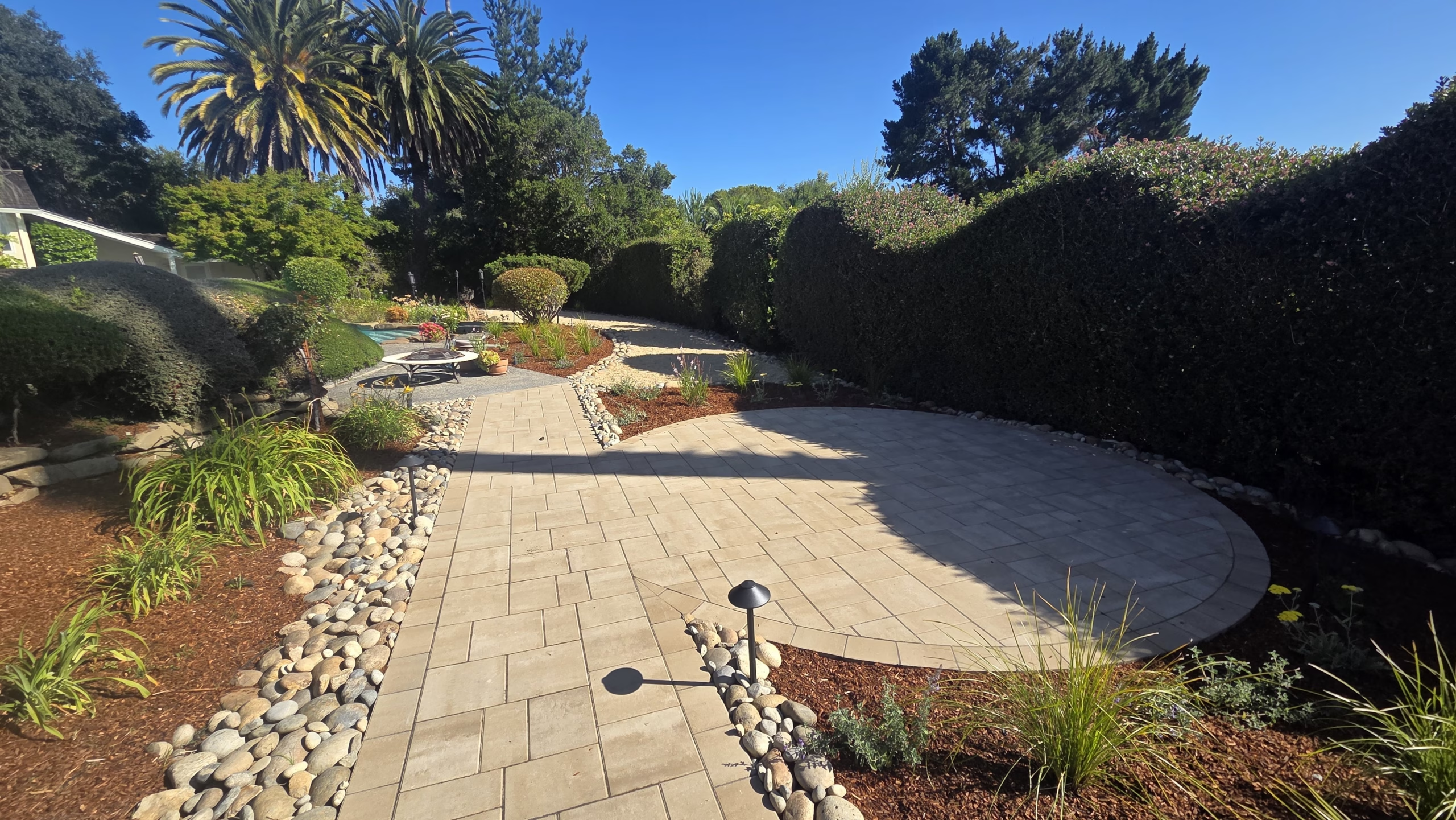 Los Altos Hills
Paver Terrace, Pet Turf Dog Run and DG Courtyard
740 sq ft of Belgard paving with step treads, a fenced pet-turf dog run, stabilized decomposed granite, planting, drip irrigation and 15 low-voltage fixtures, completed June 2026.
Planning a Landscape Around Your Portola Valley Property
Six things worth settling before materials are chosen. In Portola Valley most of them apply to most lots, and the fence and lighting rules decide what a design can look like before the site does.
Native species, measured at 54 inches
Portola Valley protects native trees by species and size, measured 54 inches above natural grade: coast live oak, black oak, valley oak and California bay laurel at 36 inches in circumference (about 11.5 inches across); blue oak at 16 inches (5 inches across); coast redwood and Douglas fir at 54 inches (about 17 inches); big leaf maple and madrone at 24 inches (about 7.6 inches). Removing a significant tree needs an Application for Site Development Permit for Removal of Significant Trees with an arborist’s report, and the Town asks that replacements come from its Native Plant List. Trees not on the list or below the thresholds, the Town’s own examples are Monterey pine, eucalyptus and magnolia, need no permit, and trimming or thinning needs none unless it substantially reduces a significant tree. Removals happen Monday to Friday between 8:00 a.m. and 5:30 p.m. We do not employ a certified arborist; where a report is required it comes from a private arborist. Tree removal.
Fifty cubic yards, three feet of fill, four feet of cut
Most Portola Valley lots slope, and the Town counts the earthwork. A Site Development Permit is required when excavation, fill or the two combined exceed 50 cubic yards, when fill will exceed three feet in depth, or when an excavation will exceed four feet; between 100 and 1,000 cubic yards the review expands to several Town departments and the Architectural and Site Control Commission. The Town also defines impervious surface broadly, and the list includes paving stones, turf stone and compacted gravel and rock areas, so a paver terrace counts toward a lot’s impervious limit. On a sloped lot the walls that hold the grade and the drain lines behind them come before any finish; substantial grading, drainage changes, walls or structures may need review or professional input. We design and build landscapes; we do not provide geotechnical engineering, and where that expertise is needed it comes from a licensed professional named in the scope. Planning FAQs.
Low, open and measured by the acre
Chapter 18.43 starts from principles, open space, sparing use, wildlife movement and views, and then gets specific. In districts under one acre a domestic fence may sit in the required yards; at one acre a front-yard domestic fence sits back 25 feet from the front line; at two acres or more only horse fences are allowed in required yards; at one acre or more, fences in required yards only where the slope is 20% or less; 20 feet back from the top of a creek bank; double fencing only inside the building envelope. Heights: 4 feet in front yards, 6 at the side and rear, 4 in side yards along a road and beside public trails in one-acre districts, horse fences 4. Front-yard, road-side, trail-side and horse fences may be no more than 50% opaque with members no wider than six inches, colors no more than 40% reflective unless the wood weathers naturally, and a fence on top of a retaining wall is measured from the exposed bottom of the wall. No building permit for a fence of six feet or less, but a fence permit whenever a fence of any height goes inside the building setbacks, on the property line or next to a trail easement. Chapter 18.43, fences and Planning FAQs.
Woodside Fire and the first five feet
Portola Valley is one of the Woodside Fire Protection District’s communities, and the district’s defensible-space page is headed by its local fuel mitigation ordinance. Its Fire Smart Yard sets the zones a landscape plan is drawn to: Zone 0, the first five feet from the house, non-combustible materials to prevent flame contact and ember ignition; Zone 1, five to 30 feet, vegetation thinned, fire-resistant and irrigated, dead material removed; Zone 2, 30 to 100 feet or more, trees and shrubs spaced and fuels reduced. Where a parcel is mapped Very High, 100-foot defensible space is mandatory and Wildland-Urban Interface building standards apply to new construction and renovations. Zone 0 is the one that changes a drawing, because it rules out combustible mulch and planting against the house. No landscape makes a property fireproof. Fire Smart Yard, defensible space and hazard zones.
Downward, warm and invisible from the road
The Town’s Design Guidelines treat outdoor lighting as something to minimise: only the lighting necessary, on only when needed, fixtures chosen to focus light on the feature lit, and fixtures that light large areas, unshaded or non-recessed spotlights and floodlights prohibited. Light is directed inward toward the center of the property, the source of light is not to be visible off-site, color is limited to the warmer 2700 to 3500 Kelvin range, and up-lighting of landscaping or structures is prohibited. That last rule removes the tree uplight that most landscape lighting plans start with, so a Portola Valley lighting plan is path, step and downlight. The same guidelines ask for native plants, except on private viewed areas, planted in random groupings. Design Guidelines.
Bear Gulch water, and a rebate that excludes turf
Portola Valley’s water comes from Cal Water’s Bear Gulch District, which also serves Woodside, Atherton and the unincorporated communities around them: about 89% purchased from the SFPUC and about 11% local surface water from the district’s watershed in the Woodside hills. Cal Water’s Lawn-to-Garden rebate pays per square foot of lawn converted to water-wise planting from its recommended native lists, requires pre-approval before the project begins and at least three approved plants per 100 square feet converted, and does not apply to artificial turf. Cal Water also rebates smart irrigation controllers. Bear Gulch District and Cal Water rebates.
Requirements depend on the property and the proposed work, and not every item above applies to every project. Confirm what applies to your address with the Town before construction. Local guidance reviewed 5 September 2026 on portolavalley.net, library.municode.com (Portola Valley Code, Chapter 18.43), woodsidefire.org and calwater.com.
One coordinated plan for the entire outdoor space
Each linked page carries the scope it covers, its pricing floor and the completed projects behind it. Mowing, cleaning and ongoing garden maintenance are not services we sell.
Design, backyard and front yard
How the design phase works and what it costs, then gathering spaces, planting, lawn areas and circulation drawn as one scheme rather than a list of features.
Pavers: driveways, patios, walkways and pool decks
Base, drainage and levels settled before the pattern is chosen. Paving stones and compacted gravel count as impervious surface in Portola Valley.
Retaining walls and steps
Level changes evaluated alongside drainage and structural requirements rather than after them; the earthwork is counted toward the Site Development Permit threshold.
Outdoor kitchens, bars and fire
Cooking, serving and fire features placed within the layout, with gas and electrical routed during base work.
Lighting, shade and water
Evening use, shade and sound considered as part of the plan; in Portola Valley lighting is downward, warm and shielded, with no up-lighting.
Artificial turf
Where a low-water lawn makes sense and where it does not, including rebate eligibility.
Budget and design fees
What does a Portola Valley landscape project cost?
Construction and design are contracted separately, so they are quoted separately and shown separately here.
Sequoia Outdoor offers a free initial one-hour onsite consultation, and the presentation that follows it is free as well. Concept plans start at $1,000, and more detailed design work is quoted according to the project. Construction projects have a $25,000 minimum, and qualifying design fees may be credited toward construction: if you enter into a construction contract with us within 30 days of your final design being delivered, an amount equal to the design fee is deducted from that contract.
The two completed Portola Valley construction projects in our recordsAbout $82,000 and about $25,000The turf lawn, paver patio and planting under the oaks, completed June 2025, signed for about $82,000; the pergola, pavers, fire pit and lighting, completed July 2025, for about $25,000. Two projects are not a base for an average, so none is given. The construction minimum is $25,000.
The three published case studies nearby$96,150 to $120,000An Atherton fire-pit terrace at $96,150 to $106,360, a Los Altos Hills terrace and dog run at $98,100 to $115,200 and a Menlo Park outdoor-living build at $105,000 to $120,000, each range the sum of its own published cost rows. Not Portola Valley pricing and not quotes for another property.
The eventual price depends on scope, access, grading, drainage, materials, structures, utilities, planting, approvals and other property-specific requirements. In Portola Valley the items most likely to move a budget are the earthwork, which above 50 cubic yards brings a Site Development Permit and above 100 an expanded review, a significant tree, which brings an arborist report to any removal, and the slope, where the walls and the drainage can cost as much as the finishes.
Ask for the split before you commit. A proposal should separate design services, construction, specialist work such as arborist input or engineering, and anything excluded. If those sit in one number, you cannot tell what a change to one of them costs.
What 16 signed proposals cost shows the full spread across the Peninsula and South Bay.
Pricing reviewed 5 September 2026.
From first visit to completed landscape
- 01
Initial consultation
The property, your priorities, intended use, timing and investment expectations.
- 02
Site discovery
Access, grade, drainage, existing trees, utilities, structures and the other visible constraints.
- 03
Concept and design
Layout, features, materials and planting direction, to the design scope you selected.
- 04
Scope and construction proposal
The work Sequoia will perform, with assumptions, allowances and exclusions identified.
- 05
Approvals and preparation
Which City or County, fire, utility, engineering, arborist or other approvals may apply, and which of those services are inside the scope. Sequoia does not perform every specialty itself.
- 06
Construction and walkthrough
The approved scope coordinated, progress communicated, and the finished work reviewed with you.
The scheduled completion date is confirmed after the preconstruction walkthrough, not at the initial consultation. Schedule credits apply only to qualifying company-controlled delays and remain subject to the signed agreement and its exclusions. Read the schedule-credit terms.
Every claim here links to the thing that backs it
Sequoia Outdoor’s website currently reports 80 review listings and recommendations across six platforms as of 2026-08-30. That is a count of listings and recommendations, not of customers and not of Portola Valley projects. Read the review archive. The license is CSLB #1099847, verifiable on the state board’s register. The project counts and figures on this page come from our own project records and are stated as such. The on-time schedule credit is subject to its complete published terms.
Portola Valley landscape design and build FAQs
Does Sequoia Outdoor work in Portola Valley?
Yes. Sequoia Outdoor is based in San Mateo and serves Portola Valley from there. Our project records show two completed Portola Valley construction projects, both photographed on this page. Design deliverables and construction work are defined and priced through their respective agreements.
Is the initial consultation free?
Yes, and so is the presentation that follows it. The initial one-hour on-site visit and the live walkthrough of your options and pricing are both free. Design work is separate, with concept plans starting at $1,000 and further deliverables quoted for the project.
What does a landscape project in Portola Valley cost?
The two completed Portola Valley construction projects in our records signed for about $82,000 (turf, paver patio and planting, June 2025) and about $25,000 (a pergola, pavers, fire pit and lighting, July 2025). Two projects are not a base for an average. The three published case studies nearby, in Atherton, Menlo Park and Los Altos Hills, are published at $96,150 to $120,000, each the sum of its own cost rows. Construction projects start at $25,000.
Which trees are protected in Portola Valley?
Native species by size, measured 54 inches above natural grade: coast live oak, black oak, valley oak and California bay laurel at 36 inches in circumference; blue oak at 16 inches; coast redwood and Douglas fir at 54 inches; big leaf maple and madrone at 24 inches. Removing one needs a Site Development Permit for removal of significant trees with an arborist’s report. Trees not on the list or below the thresholds, and ordinary trimming, need no permit.
Will my Portola Valley project need a Site Development Permit?
If the earthwork is large enough. The Town requires one when excavation, fill or both exceed 50 cubic yards, when fill will exceed three feet in depth, or when an excavation will exceed four feet; between 100 and 1,000 cubic yards the review expands to several departments and the Architectural and Site Control Commission. Removing a significant tree uses the same permit. A sloped lot with terraces and walls can reach the threshold quickly, so the earthwork is estimated before the design is priced.
What kind of fence can I build in Portola Valley?
It depends on the zoning district’s minimum parcel size. Under one acre, a domestic fence may sit in the required yards; at one acre a front-yard domestic fence sits back 25 feet; at two acres or more only horse fences are allowed in required yards. Heights are 4 feet at the front, 6 at the side and rear, and 4 along roads and public trails in one-acre districts; front-yard, road-side, trail-side and horse fences may be no more than 50% opaque. A fence of six feet or less needs no building permit, but any fence inside the building setbacks, on the property line or next to a trail easement needs a fence permit.
Can we install landscape lighting in Portola Valley?
Yes, within the Town’s Design Guidelines: the minimum lighting necessary, fixtures that focus light on the feature, light directed inward with the source not visible off-site, warm 2700 to 3500 Kelvin color, and no floodlights, unshaded spotlights or up-lighting of landscaping or structures. A Portola Valley lighting plan is path, step and downlighting rather than uplit trees.
What does the fire district require of my landscape?
Portola Valley is served by the Woodside Fire Protection District, whose Fire Smart Yard sets three zones: non-combustible materials in the first five feet from the house, thinned and irrigated fire-resistant planting from five to 30 feet, and spaced fuels from 30 to 100 feet or more. In a Very High hazard zone, 100-foot defensible space is mandatory and Wildland-Urban Interface building standards apply to new construction and renovations. No landscape makes a property fireproof.
Can I get a rebate for replacing my lawn in Portola Valley?
Through Cal Water’s Lawn-to-Garden program, for a planted conversion: it pays per square foot of lawn converted to water-wise planting from Cal Water’s recommended native lists, requires pre-approval before the project begins and at least three approved plants per 100 square feet converted, and does not apply to artificial turf. We install both planted landscapes and artificial turf, so the rebate is part of the decision, not an afterthought.
Can I see examples of your Portola Valley work?
Yes. Both completed Portola Valley projects are shown on this page as photographs, with the completion month and the project size where our records give it, and no scope or price beyond that. Three case studies nearby in Atherton, Menlo Park and Los Altos Hills are published in full, with before-and-after photographs, cost rows and published ranges.
The Woodside page · Portola Valley tree removal · Planning FAQs · Fire Smart Yard · Case studies · On-Time Schedule Credit terms
Portola Valley and the Towns Around It
Three things are worth confirming for your own address before design begins, because each changes who reviews the work: the zoning district’s minimum parcel size, which decides what fence is allowed; the earthwork, which above 50 cubic yards brings a Site Development Permit; and whether any oak, bay, redwood, fir, maple or madrone near the work meets the significant-tree threshold.
Let’s Plan Your Portola Valley Landscape
Tell us what you want to change, how you hope to use the space, and the investment range you are considering. We will visit the property, discuss the appropriate design scope and explain the next step.
Construction projects start at $25,000. Design is quoted separately.