


Project Fit & Investment Tiers
Sequoia Outdoor specializes in complete outdoor environments on the Peninsula. We do not perform minor pool coping repairs or isolated deck board replacements.
- Minimum Project Engagement: $25,000
- Published completed projects: $50,000 to $431,000 on this site, each shown with its scope and rounded investment
- On-Time Guarantee: Applies to all comprehensive design-build contracts.
A pool deck is not just a patio; it is a highly regulated structural environment interacting with millions of gallons of water and immense hydrostatic pressure. In Atherton, Woodside, and Los Altos Hills, replacing or building a pool deck triggers strict California Building Code (CBC) mandates that most standard landscapers ignore. This includes installing a continuous equipotential bonding grid (copper wire mesh) beneath the deck to prevent electrocution, enforcing minimum slip-resistant surface ratings, and grading precise positive slopes to direct chemically treated water away from the pool shell. This 2026 guide reveals the true costs of engineering a safe, luxurious, code-compliant pool deck.
Educational only (not engineering advice). Every site is unique. Always verify structural and electrical requirements with a licensed civil engineer and your local Authority Having Jurisdiction (AHJ).
TL;DR: Peninsula Pool Deck Costs (2026)
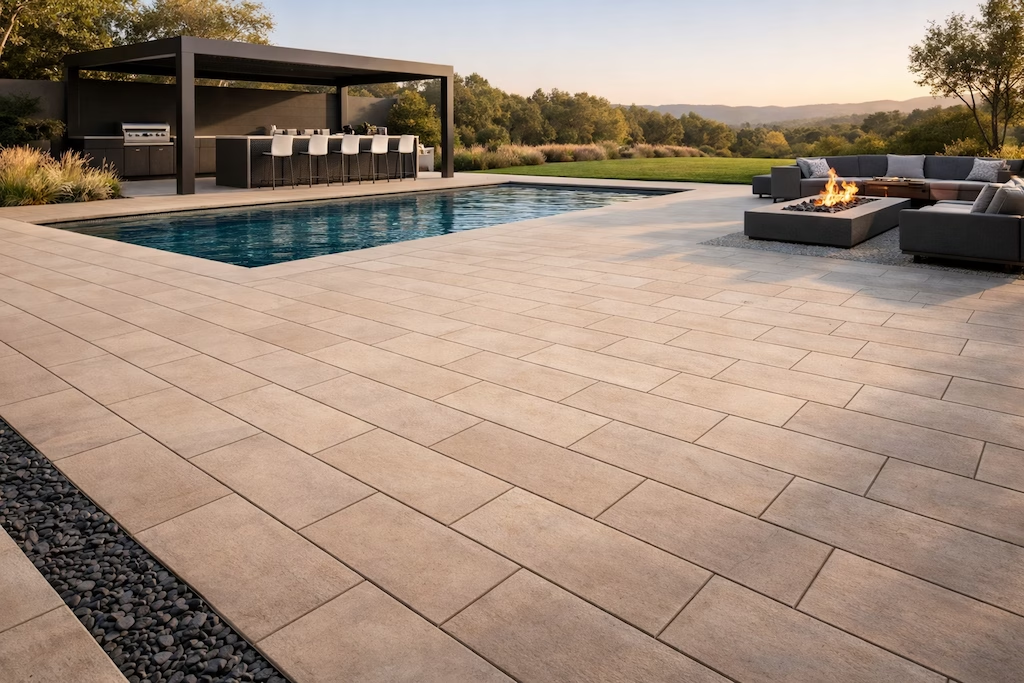
- $50k and up: Main entertaining pool deck utilizing premium slip-resistant pavers (Techo-Bloc) or architectural stone, engineered drainage slopes, and mandatory copper equipotential bonding.
- $95k and up: Expanded multi-level decking, structural retaining walls separating the pool from the hillside, custom coping integration, and integrated low-voltage lighting.
- $150k and up: Estate-scale wrap-around programs utilizing exotic Ipe hardwoods or large-format porcelain, cantilevered decks over steep grades, and complete utility trenching for adjacent pool houses.
- Biggest Cost Drivers: Material tier (porcelain vs. stone vs. composite), foundation/base excavation, electrical bonding compliance, and structural elevation requirements.
- The Sequoia Difference: We verify all sub-base compaction, drainage, and electrical bonding with documented photo proof before a single finish stone is laid.
Costs: Structural Pool Deck Programs (2026)
The cost of a pool deck is dictated by the depth of the excavation, the strict adherence to electrical safety codes, and the structural requirements of building around a large underground vessel.
| Program Level | Typical Planning Range | Core Scope Included |
| Premium Flush Hardscape | $50k and up | Ground-level entertaining space featuring premium slip-resistant pavers, engineered sub-base compaction, mandated equipotential electrical bonding, and linear deck drainage. |
| Elevated & Multi-Level Layouts | $95k and up | Complex terraced designs requiring structural retaining walls, custom cantilevered coping, integrated stairways, and architectural glass or cable railings. |
| Estate Structural Expansion | $150k and up | Large square footage utilizing large-format porcelain or custom natural stone, heavy structural grading around the pool shell, and full integration with new covered structures. |
Cost Adders: What Escalates Pool Deck Budgets
These specific variables dictate the structural requirements and shift the project timeline significantly.
| Critical Adder | Why It Increases Cost | Where It Goes Wrong |
| Equipotential Bonding Grid | The California Electrical Code requires a continuous copper wire grid buried beneath the entire perimeter of the deck to ground stray voltage. | Ignoring the electrical code entirely, leaving swimmers exposed to severe shock hazards and failing city inspections. |
| Elevation & Structural Support | Building a deck on a hillside around a pool requires deep concrete footings engineered to resist seismic loads without compromising the pool shell. | Under-sizing the footings, causing the deck to settle and pull the coping directly off the pool wall. |
| Material Adhesion & Slip Resistance | Pool decks require highly specific, verified slip-resistant materials set with specialized adhesives to withstand constant water exposure and chlorine/salt degradation. | Using standard smooth tile or inferior mortar, resulting in a dangerous, slippery surface that pops loose within a year. |
Spec Tiers: How Estate Pool Decks Prevent Failure
Your base prep, sub-surface drainage, and edge restraints dictate whether your deck survives a single decade or multiple generations.
| System Element | Common Approach | The Sequoia Spec |
| Base Preparation | Shallow excavation and manual hand-tamping over old, saturated pool backfill. | Deep over-excavation, geotextile fabric wrap, and 95% mechanical compaction of Class II permeable base. |
| Surface Drainage | Flat installation allowing dirty runoff and debris to wash directly back into the pool. | Engineered positive slope (1/4 inch per foot) directing water strictly away from the coping into integrated linear slot drains. |
| Edge Restraint | Flimsy plastic edging spiked into soft topsoil at the perimeter of the deck. | Hidden concrete bond beams poured beneath the perimeter stones, locking the entire system permanently in place. |
Drainage, Bonding & Utilities Operational Flow
A pool deck is a complex intersection of water, electricity, and structural mass. It must be meticulously mapped before construction begins.
Pro Tip: The Trench Once Strategy
- Equipotential Bonding: The mandatory copper grounding grid is mapped, laid, and verified by inspectors before the base rock is imported.
- Deck Drainage: Linear deck drains are trenched and tied into the property’s primary gravity discharge path, so splashed water leaves the deck rather than pooling at the coping.
- Utility Sleeves: Rigid PVC conduit is run beneath the deck footprint to supply future landscape lighting or pool sweeps without ever needing to cut the finished stone.
Permits, Electrical Codes, and HOA Realities
The Peninsula heavily polices new pool deck installations due to the combination of strict stormwater management protocols and rigorous electrical safety codes.
Common 2026 Permit Triggers: Pouring large concrete pads, altering existing drainage patterns, exceeding property “impervious surface” limits, or modifying the electrical bonding grid around a pool will always trigger intense city review.
Sequoia Outdoor holds an active Class A General Engineering license, the classification under which we contract for and build heavy infrastructure elements directly adjacent to complex aquatic environments across San Mateo and Santa Clara counties.
Protect Your Estate: Sequoia’s Due Diligence Advantage
Most contractors will gladly show you photos of a clean, finished patio. They will never show you photos of the base they buried underneath it. We built Sequoia to provide absolute operational transparency.
What to Ask Any Contractor, Including Us
- Documented Subsurface Proof: We utilize a photo-documented quality checklist. Your Project Manager captures mandatory photo and video proof of the excavation depth, the equipotential copper bonding grid, and utility trenching before anything is covered up.
- Excess Liability Insurance: We carry a $5,000,000 umbrella policy above our general liability coverage.
- The On-Time Guarantee: We put a written completion guarantee in the contract. If our internal scheduling causes a delay, we provide financial compensation.
Timeline: Pool Deck Installation Scheduling
- Design & Hardscape Definition: 2 to 8 weeks depending on material selection, slip-resistance ratings, and layout complexity.
- Engineering and Permits: 4 to 12+ weeks if the project triggers grading permits, retaining walls, or complex electrical bonding reviews.
- Construction: 4 to 12+ weeks of active installation, heavily dependent on the extent of the utility trenching and custom masonry cuts around the pool coping.
Quote Checklist: Comparing Pool Deck Bids
If the electrical bonding and base specifications are not written into the contract, you cannot confirm the bonding grid was installed, and it is buried before the deck goes down.
| Contract Item | What to Demand in Writing | The Red Flag |
| Equipotential Bonding | Explicit confirmation that a code-compliant copper grid will be installed and inspected. | The contractor claims “you don’t need bonding for a simple paver overlay.” |
| Base Prep & Drainage | Mandated 95% compaction and a detailed plan showing slope percentages directing water away from the pool shell. | Base methodology and drainage are left entirely undefined. |
| Permits & Approvals | Clear legal language dictating who handles the city permitting and inspections. | The contract explicitly states the homeowner is responsible for all permits. |
Qualifying Questions (Speeds Up Your Estimate)
- City & Neighborhood: Atherton, Hillsborough, Portola Valley, Woodside, Menlo Park, Palo Alto, Los Altos Hills, Saratoga, Monte Sereno, Los Gatos.
- Scope: Pool deck footprint, material type, coping replacement, retaining walls, structural steps, drainage mapping.
- Timeline: Ideal start date and any strict deadlines.
- Project Budget Range: $50k and up.
- HOA: Yes or no, and known impervious surface constraints.
Frequently Asked Questions
What is Sequoia’s minimum project size?
Our minimum engagement is $25,000. Most of our custom pool deck programs land at $95k and up. We do not perform basic overlay services or minor paver repairs.
Does the On-Time Guarantee apply to pool deck projects?
Yes. Our On-Time Guarantee applies to all comprehensive design-build contracts. We evaluate soil conditions, pool shell integrity, and permit cycles early to lock in a confirmed timeline.
Do I need permits for a pool deck on the Peninsula?
Often, yes. If the grading changes historical drainage patterns, if the patio triggers impervious surface limits, if retaining walls are involved, or if the electrical bonding grid must be updated, strict city reviews are required. We handle this process for you.
How long does an engineered pool deck project take?
Timelines heavily depend on approvals and scope. Many programs include several weeks of planning and permitting, followed by an active construction phase. Projects move fastest when material selections and utility routes are locked in early.
Service Area (Peninsula Focus)
We serve San Mateo and Santa Clara Counties, heavily focused on managing complex terrain in ultra-affluent pockets.
San Mateo County: Atherton (94027), Hillsborough (94010, 94062), Portola Valley (94028), Menlo Park (94025), San Carlos (94070), Woodside, and Emerald Hills.
Santa Clara County: Los Altos Hills (94022, 94024), Los Altos (94022, 94024), Saratoga (95070), Monte Sereno (95030), Palo Alto (94301, 94304, 94306), Cupertino (95014), Los Gatos (95030, 95032).
Ready for a Code-Compliant, Premium Pool Deck?
We plan the entire system first: deep subgrade compaction, hydrostatic drainage, electrical equipotential bonding, and CSLB-compliant scope documentation. Then we execute with real-time milestone tracking and a contracted completion date, set after the pre-construction walkthrough.